


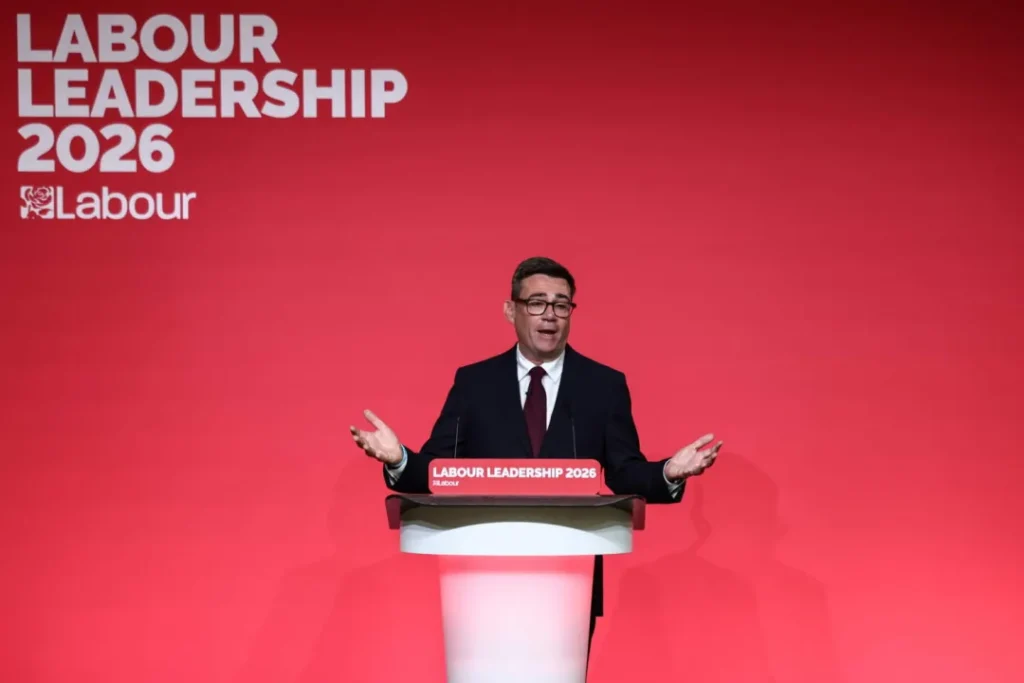
London, United Kingdom. Andy Burnham was elected leader of Britain’s governing Labour Party on Friday, positioning him to become the country’s seventh prime minister in a decade when he replaces Keir Starmer on Monday. At a special party conference, Burnham said he was ready for power and would offer hope to people in “forgotten places everywhere”.
Leadership transition
Burnham told Labour lawmakers and party officials that the party was united and would put the power of that unity “at the service of people”.
The former mayor of Greater Manchester, known as the “King of the North” for defending the region’s interests, returned to Parliament last month after winning the Makerfield seat. His return began a four-week process to remove Starmer, whose unpopularity had turned Labour lawmakers against him.
Labour is expected to announce Burnham’s cabinet team and provide further details of his approach to government on Monday.
Regional power
Burnham has campaigned on a pledge to counter the rise of the populist Reform UK party, which has led opinion polls for months and threatens Labour’s parliamentary seats ahead of the next election, due by 2029.
He has proposed what he described as the “biggest rebalancing of power” from London to Britain’s regions, arguing that it would address inequality and resentment in “left-behind communities” that have increasingly supported Reform.
His central policy pledge is decentralisation. Burnham has said Whitehall has become too powerful at the expense of Britain’s regions and has promised to give regional authorities greater control over economic development, housing, transport, education and skills.
He plans to create a “Number 10 North” in Manchester, modelled on Downing Street, to oversee the shift and promote what he calls “good growth” in every postcode. He has also pledged greater public control in the regions over water, housing, energy and transport, as well as further devolution to Scotland, Wales and Northern Ireland, where assemblies currently lack tax-raising and borrowing powers.
Industry, education and housing
Burnham has called for a rebuilding of Britain’s manufacturing base, focusing on defence, steel, energy, food and farming. He has also urged increased investment in the armed forces to support reindustrialisation in struggling regions and reduce reliance on foreign suppliers.
On education, he has called for less emphasis on university study, greater parity between academic and technical qualifications, and more apprenticeships offered by businesses for young people.
His housing plans include what he has described as the largest social housing construction programme since the post-war period, using vacant public land to reduce costs. He has also backed a “Housing First” approach based on Finland’s system of providing homeless people with permanent homes rather than transitional accommodation.
Tax policy
Burnham has committed to Labour’s existing fiscal rules and its manifesto pledge not to raise taxes on working people. He has proposed possible reforms to business rates to support pubs and high street businesses, alongside a land-value tax that could replace stamp duty and council tax.