


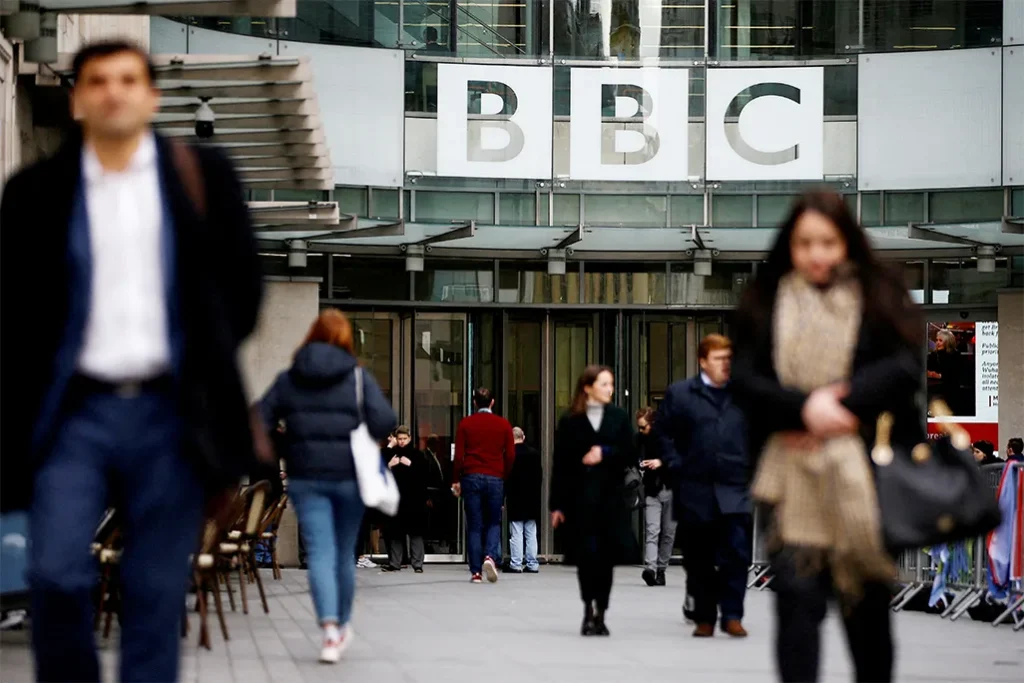
London, United Kingdom. The BBC said its current funding model was not sustainable for delivering its public broadcasting mission, citing a gap between its audience reach and the number of households paying the licence fee.
The broadcaster will need to agree a new funding settlement with the government before the current arrangement expires at the end of 2027.
Funding options
The BBC said 94% of UK adults use its services each month, while 80% of UK households pay the licence fee.
Potential options for future funding include retaining the television licence fee, introducing subscriptions or using advertising funding.
Director General Matt Brittin, who began his role in May and previously worked at Google, described the funding situation as “a moment of real jeopardy” for the BBC and the United Kingdom. He said work to reinvent the broadcaster was under way.
Brittin said it was appropriate for the government to consider the level, scope and future collection of the licence fee.
Broadcasting partnerships and standards
Brittin said the government supported BBC discussions with other British broadcasters, including Channel 4, on bringing content together through a “sovereign media platform”.
The BBC said it had made a significant commitment in recent years to improve its culture, processes and standards following a series of high-profile scandals.
The organisation was thrown into crisis last year by accusations of bias that prompted U.S. President Donald Trump to sue it.
Top-paid presenters
Radio presenter Scott Mills was among the BBC’s highest-paid stars, receiving between £745,000 and £749,999 annually. Greg James was paid between £440,000 and £449,999, while political presenter Laura Kuenssberg received between £405,000 and £409,999.
Mills was sacked in March following allegations concerning his personal conduct.