


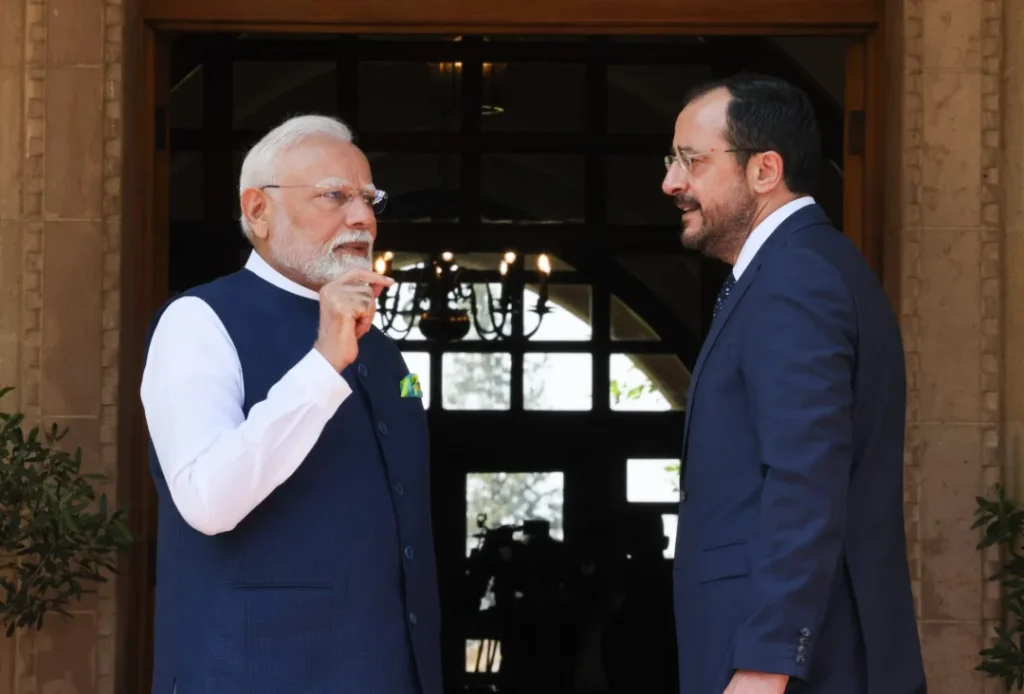
Nicosia, Cyprus. President Nikos Christodoulides on Wednesday welcomed the trade deal agreed between the European Union and India, describing it as a “landmark” agreement. He said the deal creates “a free trade space of immense opportunity for two billion people.”
Christodoulides’ response
In a post on social media, Christodoulides said he “warmly welcomes” the deal and reiterated the slogan of Cyprus’ six-month term as the Council of the EU’s rotating presidency, that the bloc is “open to the world”. He said the agreement will serve as “a bridge between continents, markets, and people”, and as “a strategic partnership that grows from strength to strength”.
How the agreement was reached
The agreement was reached during European Commission President Ursula von der Leyen and European Council President Antonio Costa’s joint visit to India on Tuesday. A number of steps remain before the agreement can enter into force.
Next steps before entry into force
The European Commission will be required to put forward a proposal regarding the deal to the European Council. A “qualified majority” of heads of government—at least 55 per cent of member states representing at least 65 per cent of the bloc’s population—must agree for the deal to progress.
The EU and India will then be able to sign the agreement and enforce it provisionally, though the European Parliament will also have to give its consent at some point.
Von der Leyen’s comments
Von der Leyen said on Tuesday that the EU and India had “made history” and “deepened the partnership between the world’s biggest democracies”.
“We have created a free trade zone of two billion people, with both sides set to gain economically. We have sent a signal to the world that rules-based cooperation still delivers great outcomes,” she said.
Commission highlights on tariffs and protections
The commission said the deal will “open a massive market to European farmers”. It said Indian tariffs on European wines are set to fall from 150 per cent to 20 per cent in the years following the deal’s entry into force, and that tariffs on European olive oil will fall to zero from 45 per cent.
It also said “sensitive European agricultural sectors will be fully protected”, with “products such as beef, chicken meat, rice, and sugar” excluded from liberalisation, and that “all Indian imports will continue to have to respect the EU’s strict health and safety laws”.
What do you think will be the most significant effect of the EU-India trade deal?