


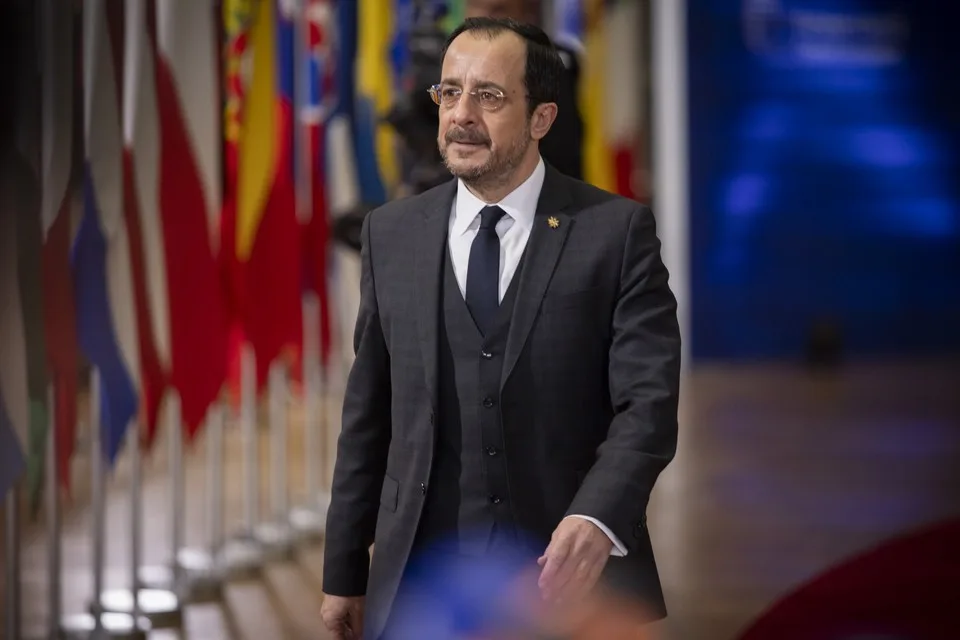
Brussels, Belgium. Cyprus President Nikos Christodoulides said relations between the European Union and the United States have not been “irreparably damaged,” amid US President Donald Trump’s increased rhetoric and demands over sovereignty of Greenland.
Call for de-escalation and respect for sovereignty
Christodoulides spoke on Thursday night on his arrival at an extraordinary European Council summit in Brussels. Asked whether EU-US relations are damaged beyond repair, he said he did not believe the EU should follow that path.
He said the aim is to de-escalate rather than escalate, adding that escalation would not be in the interest of the EU, the United States, or transatlantic relations. He said the EU is seeking a positive way forward without undermining the territorial integrity or sovereignty of any member state.
Support for Denmark and reference to Cyprus’ experience
Christodoulides said Cyprus and the EU have full respect for the sovereignty and territorial integrity of the Kingdom of Denmark. He added that Cyprus knows better than any other member state what a violation of sovereignty and territorial integrity means.
He said the EU’s goal is de-escalation without any compromise on sovereignty or territorial integrity, describing them as basic principles of international law.
Strategic autonomy as a Cyprus presidency priority
Christodoulides said developments regarding Greenland have confirmed the need for the goal Cyprus has set for its six-month term holding the rotating presidency of the Council of the EU: autonomy.
He cited autonomy in defence and security, energy issues, and strengthening competitiveness, and said the timing confirms the approach and will help efforts to achieve the EU’s strategic autonomy and strategic independence.
How do you think the EU should balance de-escalation with defending member states’ sovereignty?