


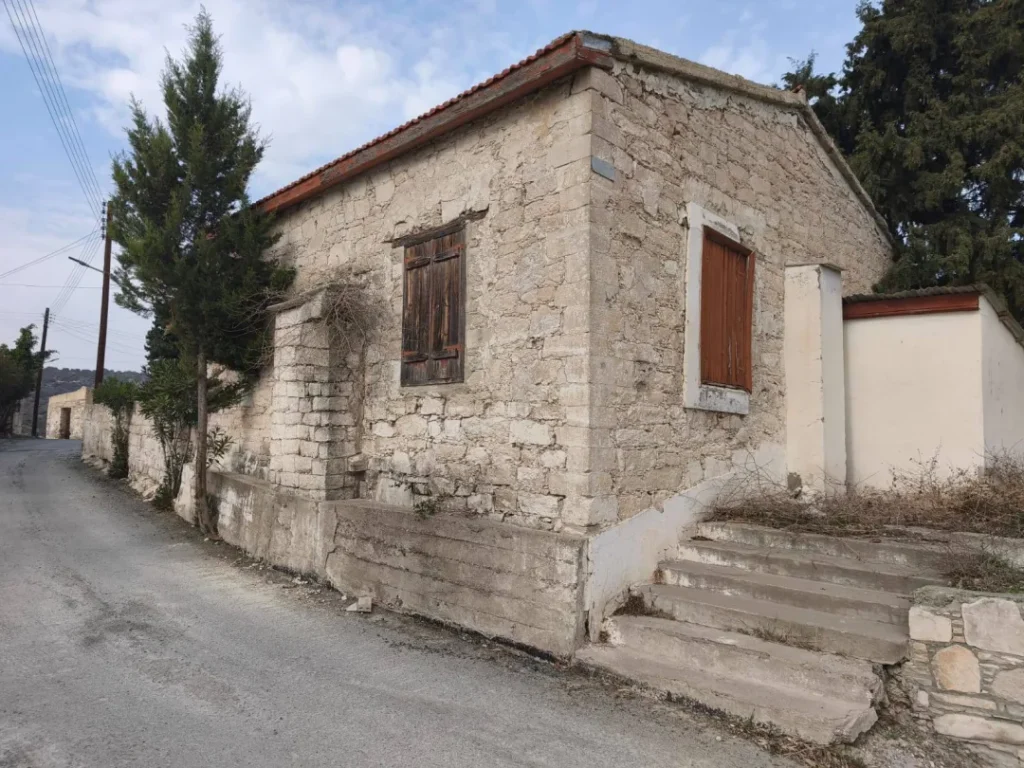
Ayios Thomas, Cyprus. Conservation work at the mosque and old schoolhouse in the Limassol district village of Ayios Thomas has begun, according to bi-communal technical committee on cultural heritage co-chairman Ali Tuncay.
Funding and support
Tuncay said the work is being carried out with financial support from the European Union and technical support from the United Nations development programme. He thanked “all the experts and workers involved for their contributions”.
Village background
Ayios Thomas is located between the villages of Avdimou and Anoyira in the west of the Limassol district and was historically a Turkish Cypriot village. It served as a reception centre for Turkish Cypriots displaced from the nearby villages of Prastio and Yerovasa during intercommunal violence in the 1960s.
The village’s population fled to the British Akrotiri base in late 1974 and stayed there until 1975, when it was transferred via Turkey to the island’s north and resettled in the village of Kontea, located north of Pyla.
The village is now inhabited by a small number of Greek Cypriots who were displaced from the north, mostly from the Karpas peninsula.
Other planned and ongoing projects
Tuncay said earlier this year that, in addition to the work in Ayios Thomas, work will also begin at the mosque in the Limassol district village of Koilani. He said tenders will be put out for conservation work on a total of 10 other mosques, five in the Paphos district and five in the Larnaca district.
He added that work is ongoing at the Panayia Apsinthonissa monastery, located between the Kyrenia district villages of Sychari and Vouno, and at the Apostolos Andreas monastery near Rizokarpaso. He said five other restoration projects are set to commence on religious buildings in the Kyrenia district before the end of the year.
Tuncay also said work will continue to conserve and restore non-religious buildings, including a historic stone house in the Famagusta district village of Limnia, the Diamante bastion of Famagusta’s Venetian city walls, and Lefka’s historic aqueducts.
Committee approach
Tuncay said the committee’s work is “balanced between both sides” of the island and the cultural heritage of both the Turkish Cypriot and Greek Cypriot communities, as well as other communities on the island.
What do you think should be prioritised in future cultural heritage conservation projects on the island?