


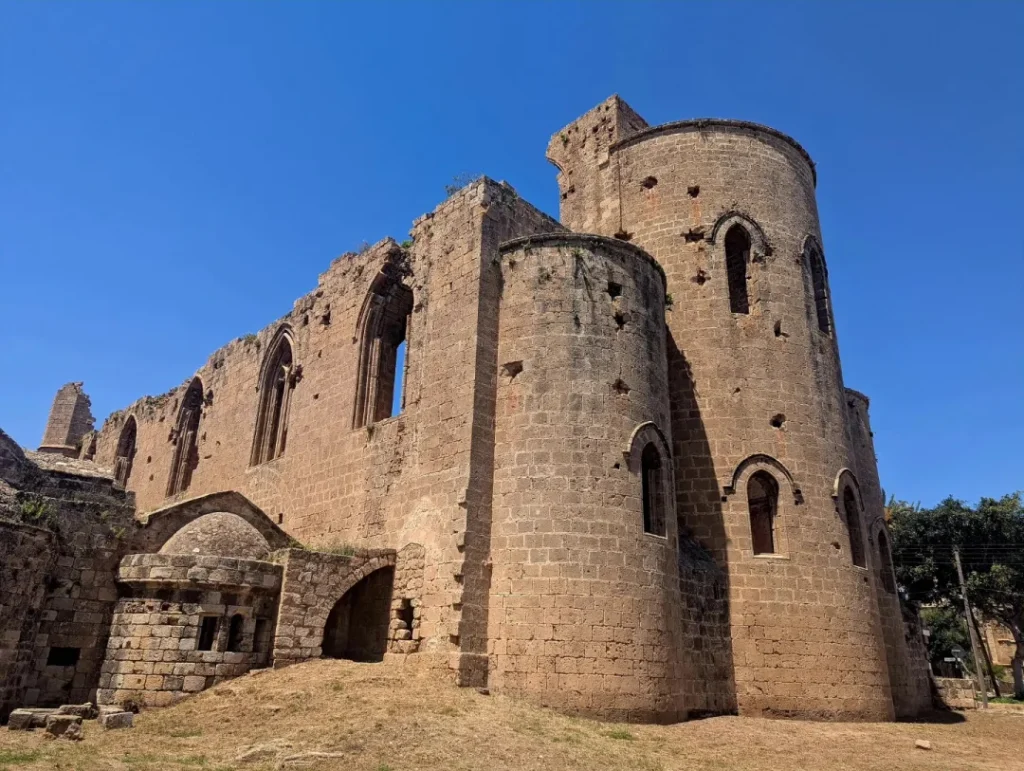
Famagusta, Cyprus. Conservation design works for the historic church of St George of the Greeks in Famagusta are underway, according to the United Nations Development Programme. A recent joint site meeting assessed the monument’s conservation needs and set priorities for the next phase of the design process.
Site meeting reviews conservation priorities
Representatives from UNDP, the project’s design team, the bicommunal technical committee on cultural heritage and its advisory board took part in the meeting. Project managers, local stakeholders and members of the community also attended to identify requirements for the preservation and future safeguarding of the landmark.
Historic significance of the monument
St George of the Greeks is one of the most significant medieval monuments in Famagusta and served as the cathedral of the city’s Orthodox community during the late Lusignan and Venetian periods. Built in the 14th century, it is considered one of the finest examples of the rare Franco-Byzantine architectural style, combining Gothic elements with traditional Byzantine design.
Role in medieval Famagusta
The church was built in the Greek quarter of medieval Famagusta when the city was one of the eastern Mediterranean’s most important trading centres. Historians believe it was constructed partly as a counterpart to the nearby Latin cathedral of St Nicholas, reflecting the prominence of the Orthodox community despite the island’s Frankish rulers.
Damage and project implementation
The monument suffered extensive damage during the Ottoman siege of Famagusta in 1571, and traces of cannon fire remain visible on the structure. The project is being carried out by the Technical Committee on Cultural Heritage, with funding from the European Union and implementation by the United Nations Development Programme.