


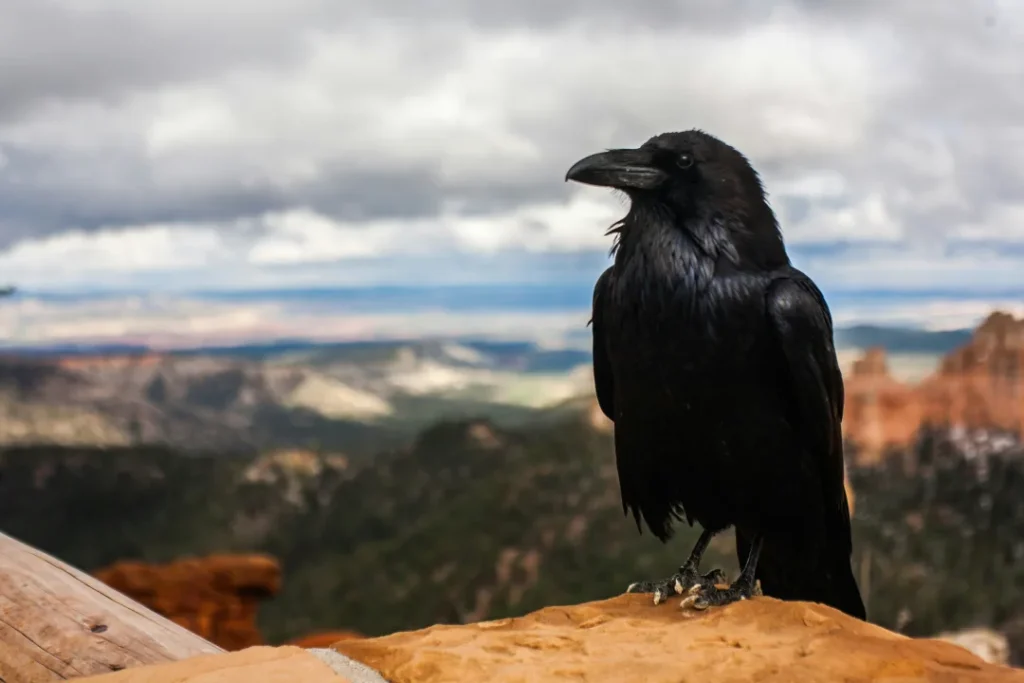
Nicosia, Cyprus. Crows and other corvids are increasingly recognised by scientists for problem-solving, memory, social learning and behaviours once considered exclusive to humans and other primates. Cyprus is home to several corvid species, including the Hooded Crow, Eurasian Magpie, Jackdaw and the endemic Cyprus Jay.
Corvid intelligence
The corvid family includes crows, ravens, jackdaws, magpies and jays. Research has found that these birds can solve problems, remember individual people and learn from one another.
Elena Markitani, communication coordinator at BirdLife Cyprus, said corvids should be included in discussions about animal intelligence because their abilities have been repeatedly demonstrated through observation and experiments.
“What makes them especially fascinating is that they achieve all this with a very different brain structure from mammals,” she said. “When we see corvids showing behaviours that look ‘ape-like’ — tool use, planning, social learning, memory — it tells us that advanced intelligence can evolve in very different branches of the animal kingdom.”
Recognition and learning
Research has shown that crows can recognise individual human faces and associate particular people with danger. They can also communicate such information to other crows.
“They are extremely remarkable,” Markitani said. “A crow is not simply reacting to a human; it can distinguish one person from another and adjust its behaviour based on past experience. That kind of ability is highly valuable for survival, especially in environments shared with people.”
Corvids in Cyprus
Cyprus has several members of the corvid family. Alongside Hooded Crows, the island hosts Eurasian Magpies and Jackdaws, as well as the Cyprus Jay, an endemic subspecies found in the Troodos, Paphos and Machairas forests.
Recent research by scientists at the University of Tübingen found that carrion crows could produce a specific number of sounds in response to numerical cues. Scientists compared the finding with the way toddlers first learn to count.