


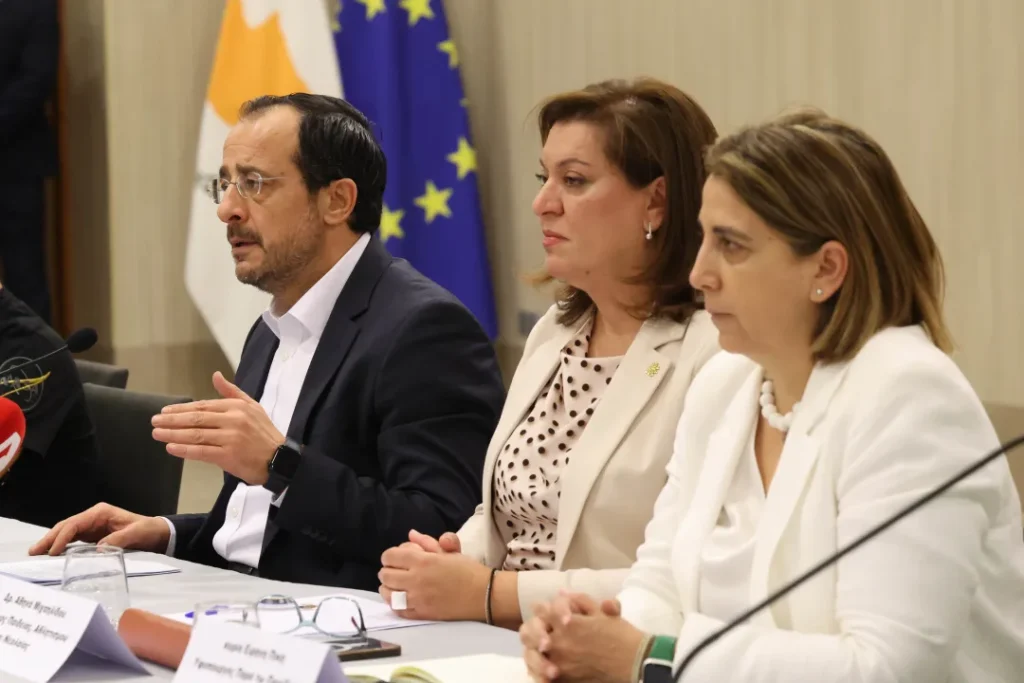
Nicosia, Cyprus. President Nikos Christodoulides on Thursday announced the creation of a new special education and inclusion unit within the education ministry to bring all existing special education services under one structure. He said the move was a key step towards a more coordinated system for children with disabilities and their families.
New unit to consolidate services
Speaking during an event at the presidential palace, where children with disabilities were invited to share their experiences directly with government officials, Christodoulides said the new unit would operate within the ministry’s existing structure and would consolidate services that currently operate in parallel.
He said the aim was to create a single point of reference for parents.
Children invited to contribute to reform
The announcement formed part of the government’s wider effort to modernise Cyprus’ education system. Christodoulides said the views expressed by children during Thursday’s discussion would feed into the ongoing consultation on reforming the country’s 27-year-old special education legislation.
Addressing the children, he said the discussion was intended to reverse the usual roles, noting that until now discussions about their education had focused on hearing from parents, teachers and specialists.
He told the children that he wanted to hear from them directly and encouraged them to speak openly about what helps them, the difficulties they face at school and what they believe needs to change.
Planned legislative changes and current measures
Christodoulides said the proposed legislation would introduce a more personalised assessment of each child’s needs and aims to ensure all pupils graduate with a common school attendance certificate, replacing the current distinction between students.
He said the government was not waiting for the legislation to be approved before introducing improvements.
Among the measures already implemented, he said, were the recruitment of 474 additional support escorts in primary education and 105 in secondary education, along with expanded training programmes for teachers, school assistants and escorts.