


Nicosia, Cyprus. Cyprus is facing severe water scarcity, according to Eurostat data showing it was the only European Union country in 2022 with a Water Exploitation Index of 71 per cent, well above the 40 per cent critical threshold. The pressure on water reserves has intensified since 2022 due to higher temperatures, reduced rainfall, prolonged drought and rising consumption needs, alongside long-standing management challenges.
Eurostat indicator highlights imbalance in water use
Eurostat data indicate Cyprus recorded a Water Exploitation Index of 71 per cent in 2022, reflecting consumption that significantly exceeds natural replenishment from available resources. Since then, higher temperatures, less rainfall, extended drought periods and increasing demand have heightened pressure on reserves.
Agriculture’s exposure and the share of dam water used for irrigation
Agriculture is among the sectors most affected, with impacts on irrigation reserves, production, costs and product prices. Despite water shortages, about 60 per cent of dam water reserves are used for irrigation, prompting calls for adjustments to improve sustainability and contribute to overall water management.
Precision irrigation to reduce waste
Traditional irrigation methods can lead to waste when more water is applied than crops require, with losses through evaporation or leakage. Precision agriculture and technological tools can support targeted delivery to plant roots, using moisture sensors to monitor needs in real time and supply the required amount of water.
Crop choices and drought-resistant alternatives
Replacing water-intensive crops such as citrus fruits and bananas with local and drought-resistant varieties, including carob trees, olive trees, almond trees, fig trees and aromatic plants, can reduce water consumption. These species are described as better adapted to Cyprus’ climate, requiring fewer resources and offering greater resilience during drought.
Treated water reuse and limitations for certain crops
The use of tertiary-treated water for irrigation is described as safe for many crops, with exceptions including vegetables consumed raw or plants whose fruits come into contact with soil. It can also be applied in organic farming when strict regulations are followed to protect public health and the environment.
Nature-based solutions and wetlands restoration
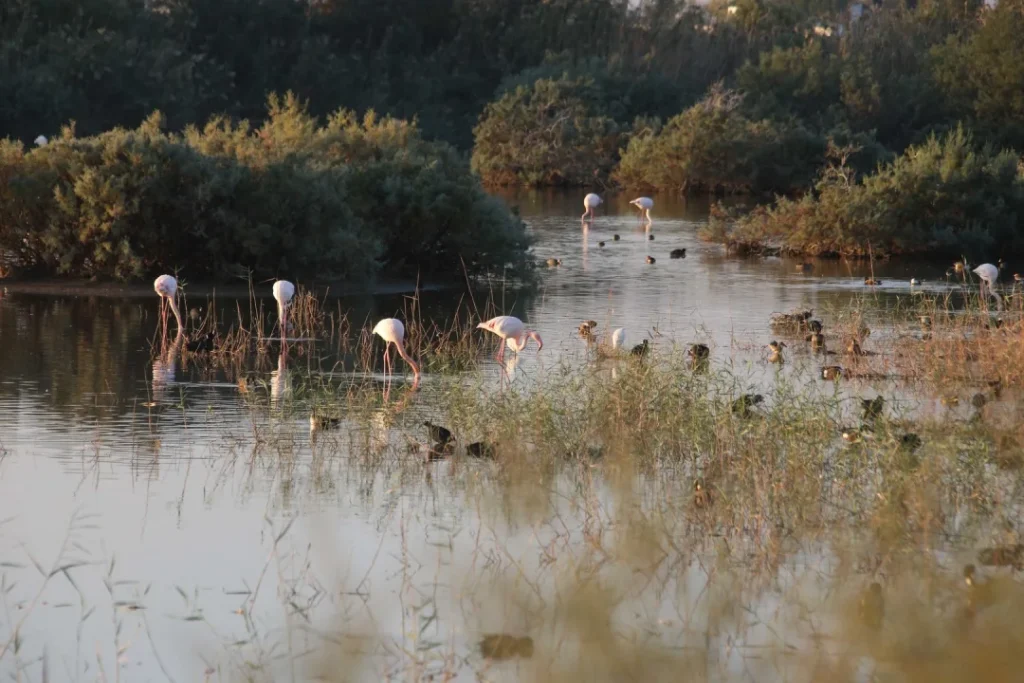
Nature-based solutions are presented as cost-effective tools for addressing climate change impacts and protecting biodiversity. Wetlands can function as natural reservoirs that recharge aquifers and support water purification, with conservation and restoration of degraded wetlands highlighted as priorities. Their function has also been used in artificial systems for wastewater treatment and storage.
Aquifer recharge practices and evolving treatment guidelines
Artificial aquifer recharge using tertiary-treated water has been applied in Cyprus since February 2004 in the Ezousa aquifer and since February 2016 in the Akrotiri aquifer, aiming to store water and strengthen water security during drought. European guidelines are also promoting quaternary treatment to remove micropollutants, supporting safer water reuse and aquifer recharge.
Reducing losses through infrastructure upgrades
Upgrading water supply infrastructure is described as critical due to significant water losses from undetected leaks. Smart technologies, including sensors, automated systems and IoT devices, can help detect issues in real time and optimise distribution to reduce losses.
Concerns over new water-intensive developments
Limiting new water-intensive developments is also highlighted as important, with infrastructure such as golf courses and water parks requiring large volumes of water for maintenance and operation, increasing pressure in a country facing severe water challenges.
What measures do you think should be prioritised to reduce water consumption in Cyprus?