


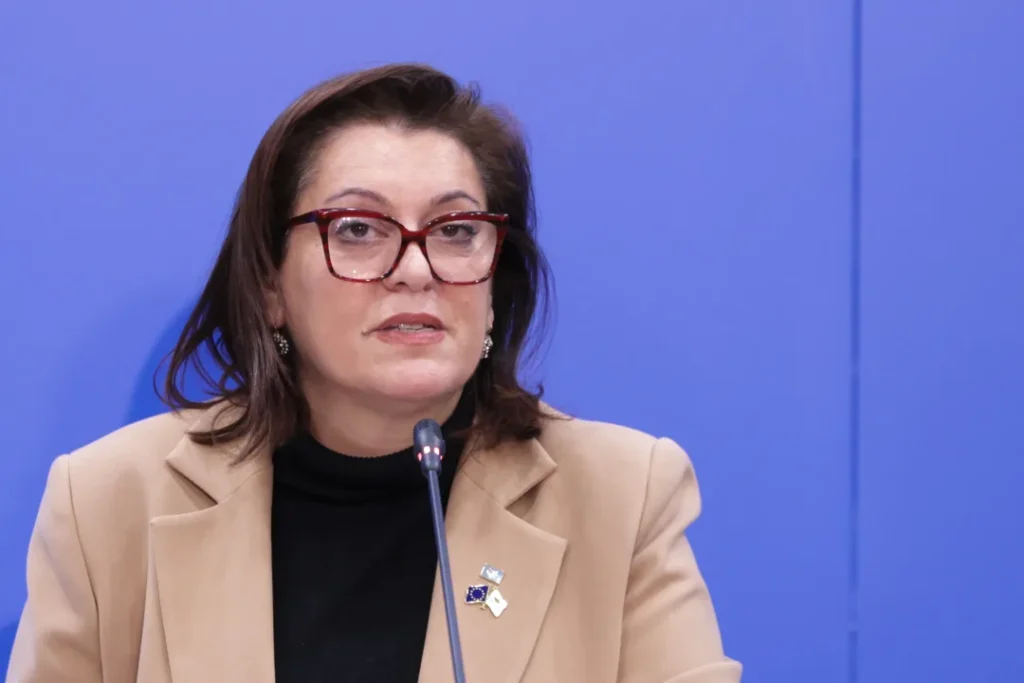
Nicosia, Cyprus. Education Minister Athena Michaelidou said education, teachers and skills are not only tools for the labour market but are central to Europe’s response to future challenges. She spoke after a two-day informal summit of European education ministers in Nicosia.
Education as long-term investment
Michaelidou said education is “called to be a long-term investment in human capital for a competitive, democratic, resilient and fair Europe”. She said the summit placed emphasis on professional autonomy, social recognition, stability, strengthening digital skills and continuous training in skills related to artificial intelligence.
First meeting since Cyprus assumed EU Council presidency
The meeting was the first convening of European education ministers since Cyprus took on the Council of the European Union’s rotating presidency. The government’s programme for the six-month term said it will “promote a comprehensive learner-centred approach”.
Priorities for the presidency programme
The programme said emphasis will be placed on citizenship education, inclusion, lifelong learning and strengthening competences for the digital and green transitions. It also said it will aim to bolster mobility and internationalisation in higher education, as well as labour market-aligned upskilling and reskilling, while promoting the joint European degree initiative.
European Commission description of the joint European degree
The European Commission describes the joint European degree as a “new type of joint degree awarded after transnational bachelor, master or doctoral programmes delivered at national, regional, or institutional level” that is automatically recognised across the EU.
It would be awarded jointly and on a voluntary basis by a group of universities across Europe, with the aim of contributing to Europe’s competitiveness by equipping graduates with future-proof skills and providing a symbol of common European identity and European belonging, the Commission said. It also said the initiative will reinforce common academic values and bring people and universities together.
Student opportunities
Students who undertake the joint European degree would have more opportunities to study at various universities in different EU countries and to graduate with a universally recognised joint diploma.
What impact do you think a joint European degree would have on students’ study choices across the EU?