


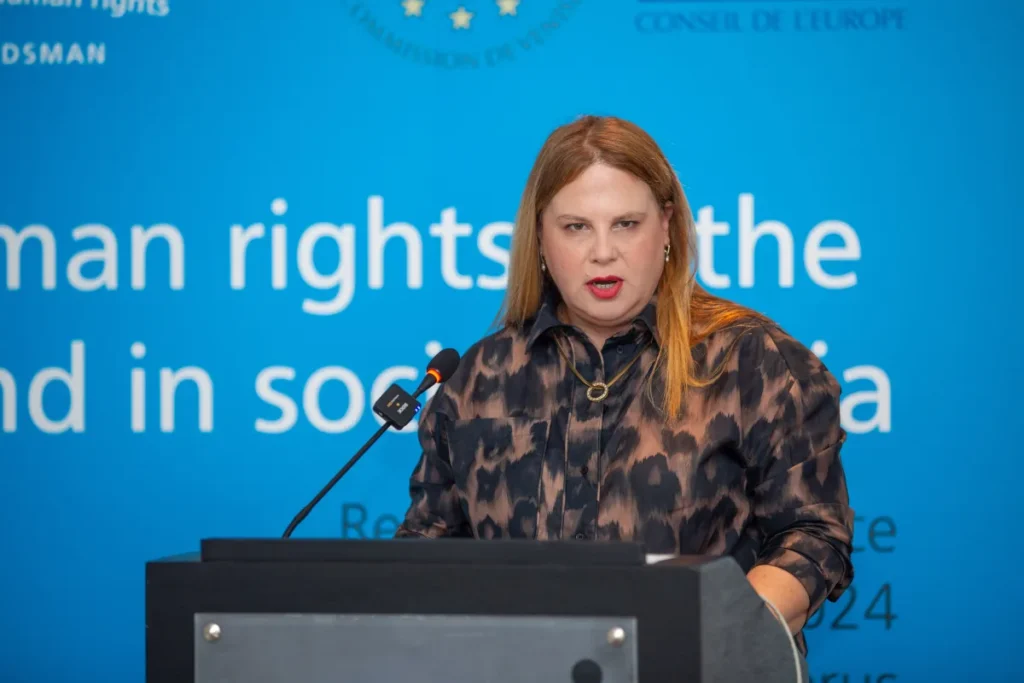
Nicosia, Cyprus. Human Rights Commissioner Maria Stylianou-Lottides said 30 victims of human trafficking were identified in Cyprus last year, warning that recorded cases do not reflect the true extent of the problem.
The victims included 16 women and 14 men, while five people were convicted of offences related to human trafficking during the year.
Challenges in identifying and protecting victims
Despite improvements to the legal and institutional framework, significant challenges remain, Lottides said.
These include difficulties in identifying victims, limited access to justice, fear of reprisals and the emergence of new forms of exploitation through digital technology.
She said artificial intelligence and online fraud were creating new forms of exploitation, while criminal organisations were using advanced technologies to recruit victims.
Victim-centred response
Combating human trafficking involves not only prosecuting perpetrators but also protecting victims’ human rights, Lottides said.
She said this required the timely identification of victims, safe access to protection, support and rehabilitation, and effective safeguards enabling them to regain control of their lives without fear, stigmatisation or re-victimisation.
The state has an obligation to develop effective prevention and detection mechanisms, strengthen cooperation among competent authorities and provide appropriate training for frontline professionals, she added.
Cooperation with civil society
Lottides said substantive cooperation with civil society was equally important, as it plays a crucial role in supporting awareness in society.
Her office promotes a victim-centred approach based on respect for human rights and equal treatment, she said, adding that tackling human trafficking was a shared responsibility.
“Every victim who is identified and protected, every form of exploitation which is prevented, and every perpetrator who is brought to justice is another step towards a society which does not tolerate the exploitation of human beings by other human beings,” she said.