


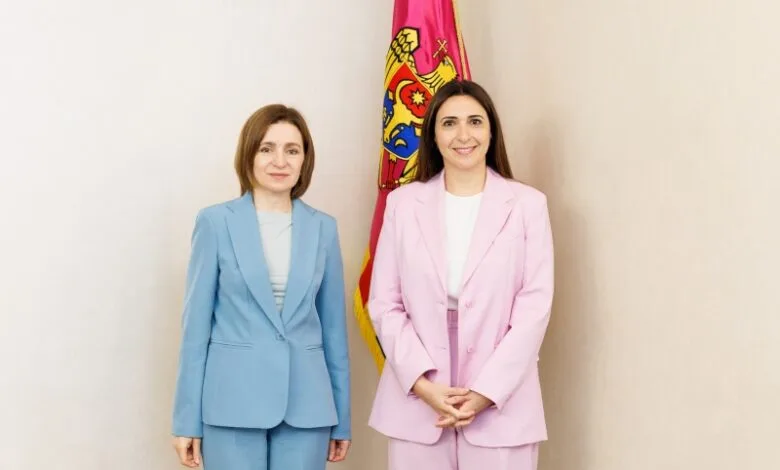
Nicosia, Cyprus. European Affairs Deputy Minister Marilena Raouna said on Thursday that she is “cautiously optimistic” the European Union’s 27 member states could agree next month to commence accession negotiations with Moldova and Ukraine.
Cyprus presidency priority
Raouna told the Cyprus Mail that enlargement remains one of the key priorities of the Cyprus presidency of the Council of the EU. She said work is continuing toward that aim, while stressing that no decision has yet been reached.
Unanimity required
An agreement to open negotiations for a candidate country to accede to the EU requires unanimity among member states, meaning all 27 would need to approve the move if the issue is raised at the next general affairs council in Brussels on June 16.
Cluster-based negotiations
EU accession talks are divided into six thematic clusters: fundamentals, internal market, competitiveness and inclusive growth, green agenda and sustainable connectivity, resources, agriculture and cohesion, and external relations.
The first cluster, which may be opened for Moldova and Ukraine next month, includes seven chapters: judiciary and fundamental rights, justice, freedom and security, public procurement, statistics, financial control, economic criteria, functioning of democratic institutions, and public administration reform.
Under EU law, it is the last negotiating cluster to be closed, even though it is the first to be opened.
Current candidate countries
In total, there are 33 chapters across the seven clusters, and current candidate member states are at different stages of the process.
Montenegro and Albania have both opened all 33 chapters, with Montenegro having completed 14 and Albania none. Serbia has opened 22 chapters and completed two, while Turkey has opened 16 chapters and completed one. Negotiations with Turkey have been frozen since 2016.
Longest gap since 1973
It has been almost 13 years since Croatia, the last country to join the EU, became a member in 2013. In the intervening years, one member state, the United Kingdom, has left the bloc.
The period between new member states joining is the longest since the 20-and-a-half years between the creation of the European Coal and Steel Community in 1952 and the accession of Denmark, Ireland and the UK to the European Communities in 1973.