


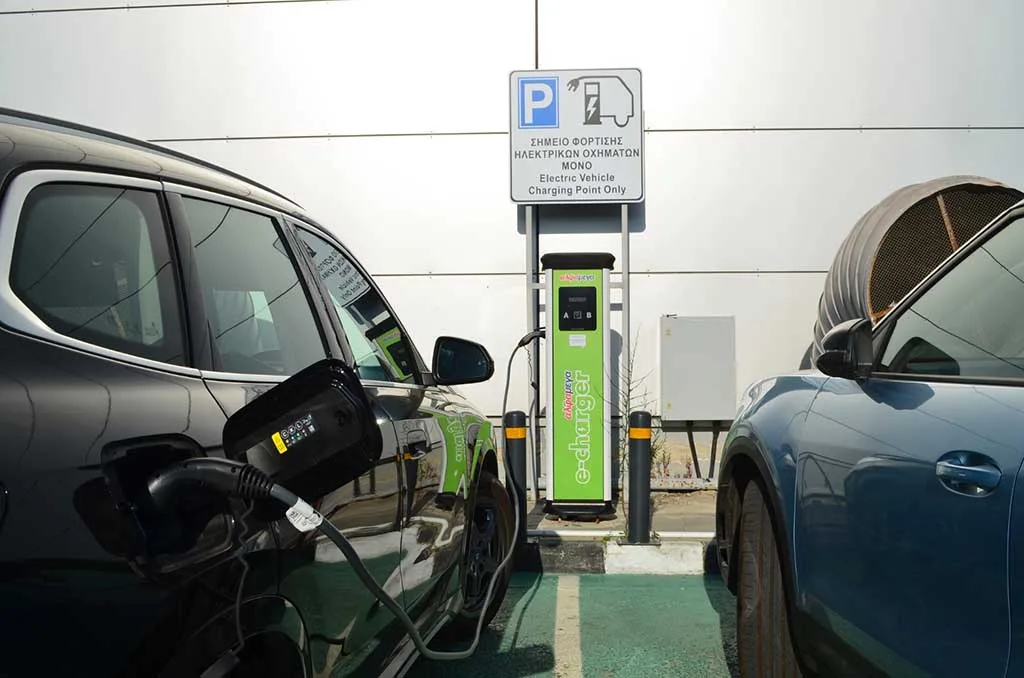
Nicosia, Cyprus. Cyprus continues to record one of the lowest electric vehicle adoption rates in Europe, but recent data indicates gradual improvement in registrations. Officials say the country aims to have 85,000 electric vehicles on the roads by 2030.
2030 target and current figures
According to Transport Minister Alexis Vafeades, Cyprus aims to reach 85,000 electric vehicles by 2030. He has said he is optimistic about meeting the target, noting that it would require about 15,000 new electric vehicle registrations each year, while also acknowledging that developments across Europe will affect the pace of adoption.
According to European Alternative Fuels Observatory data on passenger cars and vans, updated through 2025, Cyprus has the lowest percentage of battery electric vehicles and plug-in hybrid vehicles in the European Union at 0.77 per cent.
Eurostat data from 2022 showed that the only European countries with lower electric vehicle adoption rates were Bosnia and Herzegovina, North Macedonia and Turkey. Turkey has since significantly increased its percentage of electric vehicles.
Recent registration growth
Battery electric vehicles accounted for 4.7 per cent of total vehicle registrations in 2025, compared with 4.0 per cent in 2024 and 2.7 per cent the year before. The market share of battery electric vehicles and plug-in hybrid vehicles for passenger vehicles now exceeds that of eight European Union countries.
Despite the recent increase, Cyprus remains well below its stated goal. According to Angelos Sofocleous, an officer at the road transport department, there are about 8,200 licensed electric vehicles in Cyprus across all vehicle categories, including motorcycles, buses and trucks.
Charging network expansion
Concerns over charging infrastructure have frequently been central to discussion about electric vehicle uptake. For years, the Electricity Authority of Cyprus offered the only public charging network in the country, and drivers needed a subscription card to use it while the number of chargers remained around a couple of dozen.
Public charging options have increased significantly in recent years, with private operators such as EV Power installing chargers at many supermarkets and petrol stations. At the start of 2025, a law came into effect requiring non-residential buildings with more than 20 parking spaces to install at least one charging point.
Range and remaining barriers
Many electric vehicles now have a range of more than 400 kilometres, which is generally sufficient for travel from Paphos to Ayia Napa and back. Although some electric vehicles still have lower battery ranges and the expansion of charging points remains a challenge, this is no longer as significant a practical barrier as in previous years.