


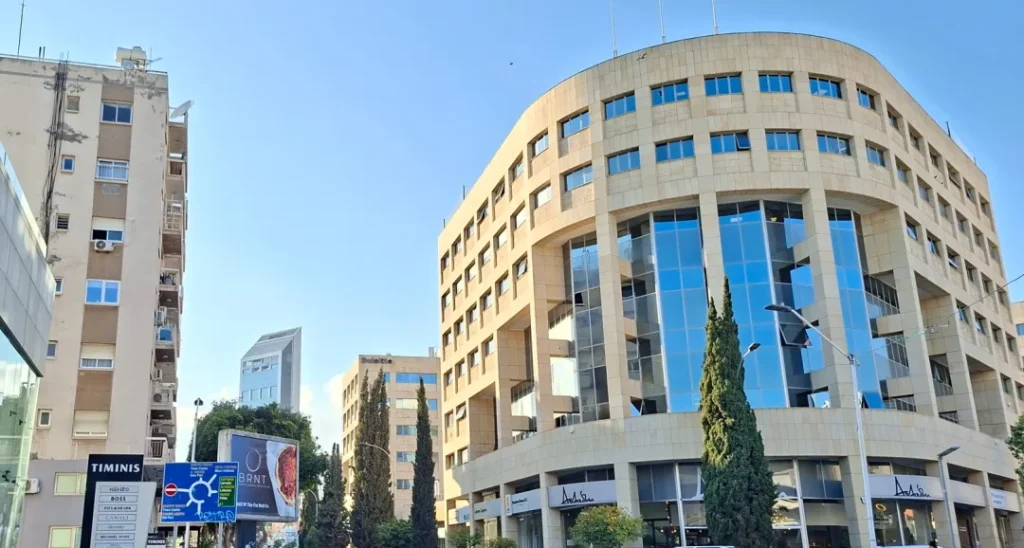
Nicosia, Cyprus. DCO Secretary-General Deemah AlYahya used a visit to Cyprus to strengthen international and local partnerships focused on the digital economy. Separately, the Central Bank of Cyprus revised down its growth forecasts for 2026 and 2027, citing the continuing war in the Middle East.
Digital cooperation meetings
Cyprus is a member of the Digital Cooperation Organisation (DCO), an international multilateral organisation focused on promoting inclusive growth in the digital economy and advancing what it describes as digital prosperity for all.
On the sidelines of Cyprus’ “Shaping the Next Digital Frontier” conference, AlYahya held a number of meetings aimed at deepening cooperation in areas ranging from digital investment and artificial intelligence to connectivity and digital infrastructure.
A key part of the visit involved discussions with Invest Cyprus chairman Evgenios Evgeniou, with whom AlYahya reviewed the progress achieved through the DFDI Cyprus initiative.
Central bank economic outlook
The Central Bank of Cyprus on Friday revised down its forecasts for economic growth in 2026 and 2027, citing the continuing war in the Middle East and warning that risks remain skewed towards weaker growth and higher inflation.
Under its June 2026 projections, the central bank lowered its forecast for gross domestic product growth in 2026 by 0.2 percentage points to 2.5 per cent and reduced its estimate for 2027 by 0.1 percentage points to 2.9 per cent compared with its projections published in March.
The CBC also now expects unemployment to rise by 0.1 percentage points to 4.6 per cent in 2026.
At the same time, it forecasts that inflation will surge by 0.5 percentage points to 3.2 per cent in 2026.
The central bank maintained its March forecast for core inflation, which excludes volatile energy and food prices, at 2.3 per cent for 2026.
In its projections for Cyprus’ main macroeconomic indicators covering the period from 2026 to 2028, the central bank said its baseline scenario assumes that the conflict will continue until the final quarter of 2026 before gradually easing.