


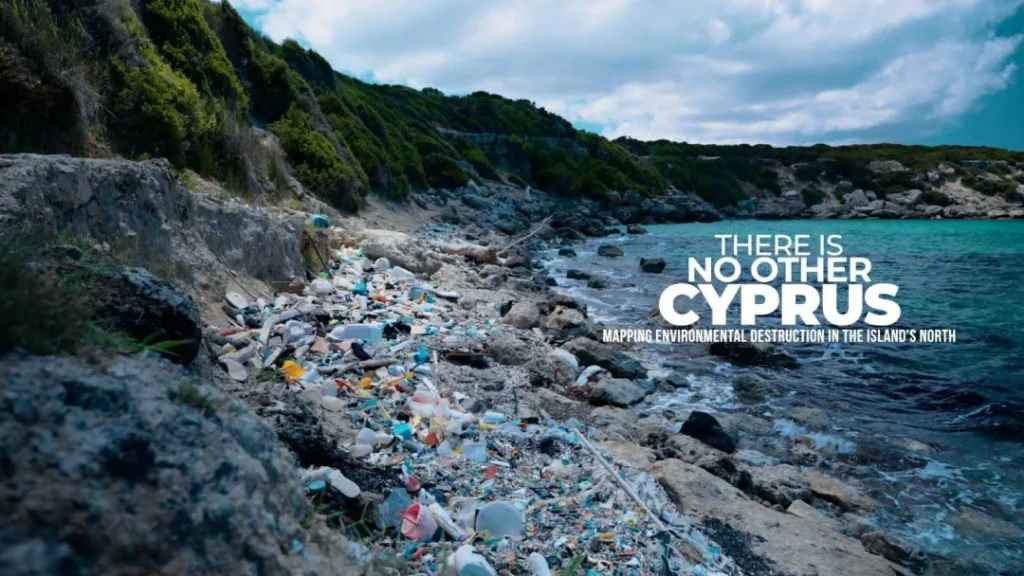
Nicosia, Cyprus. An EU-funded documentary has highlighted environmental destruction in Cyprus’s north and the difficulties of addressing island-wide environmental threats amid limited communication across divided areas. The film argues that the lack of coordinated data and action is worsening risks as the region faces severe climate impacts.
Environmental concerns across the island
The documentary, There is No Other Cyprus (Mapping environmental destruction in the island’s north), opens with professor of Transitional Justice and Human Rights at UClan Cyprus Nasia Hadjigeorgiou saying the island is divided into four parts: the south, the north, the buffer zone, and the British Sovereign Bases. She says these four geographical areas have little or no communication, making it impossible to collect environmental data and take meaningful protective action.
The film contrasts Cyprus’s reputation for clean bathing waters and Blue Flag beach awards with reported findings of microplastics detected in coastal waters, turtle nesting sites, agricultural soils, and fish tissues.
Calls for joint action on climate change
The documentary reflects concerns among environmental activists about the absence of a holistic approach to the island’s future, alongside expectations that the south-eastern Mediterranean will be among the regions most affected by climate change.
Feriha Tel, president of the Green Action Group, a Turkish Cypriot NGO focusing on cross-community environmental efforts, says in the film that climate change in Cyprus is being felt as a crisis and that there is a need to fight it together with speed and organisation.
Production and broader message
The documentary was produced by Nicosia-based independent bi-communal research hub Prio Centre Cyprus (PCC) in cooperation with Tel’s Green Action Group. While it focuses mainly on environmental problems in the north, the film’s message is presented as being directed to all Cypriots.
Turkish Cypriot economist Mertkan Hamit, featured in the documentary, says the environmental issue is even more important than solving the Cyprus problem, warning that if it is not addressed, people may no longer have a place to live.
Project coordinator and senior PCC researcher Mete Hatay told the Cyprus Mail there is a need for the documentary, saying construction in the north is out of control and that the situation amounts to destruction combined with a total lack of preparation for climate change.
What steps do you think should be taken to improve island-wide cooperation on environmental data and climate action?