


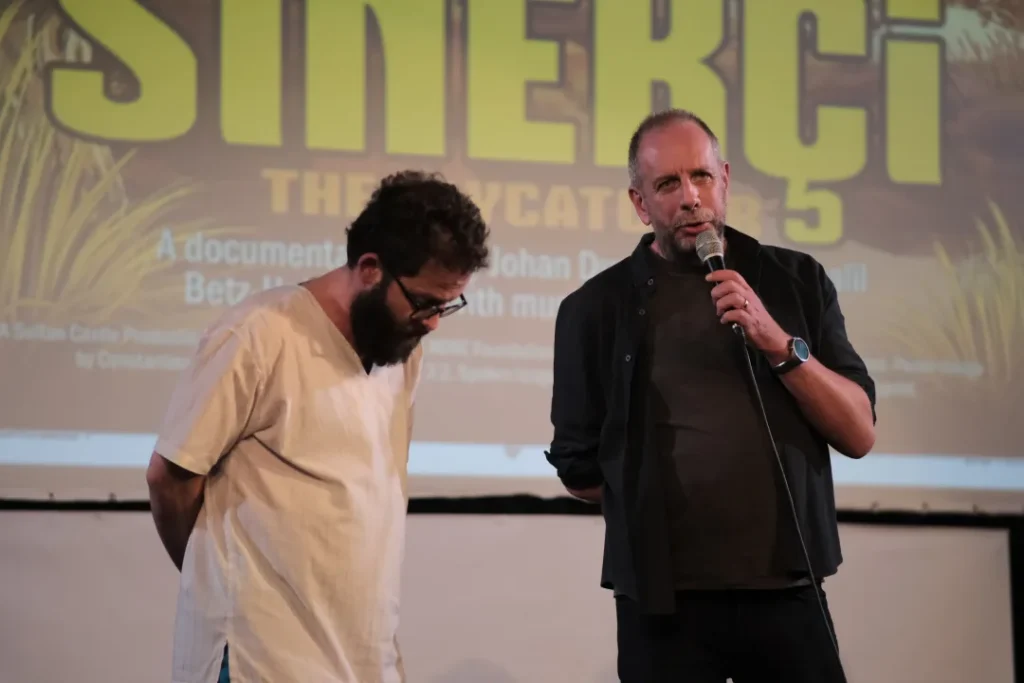
Nicosia, Cyprus. A new documentary, The Flycatcher, tells the story of Turkish Cypriot health inspector Mehmet Aziz and his work to eradicate malaria in Cyprus, while also examining present-day mosquito-control research on the island.
Mehmet Aziz and the malaria campaign
The film describes Aziz as the “Great Liberator” and says he served as chief health inspector for the British colonial government of Cyprus in the 1930s and 1940s. Born in Kalo Chorio near Larnaca in 1893, he is portrayed in the documentary as a key figure whose struggle against malaria has been disputed and pushed into obscurity by claims from rivals abroad and further overshadowed by the island’s political history.
Filmmakers and origins of the project
The documentary was made by Khalil Avi Betz-Heinemann and Johan Duchateau. Avi, a medical anthropologist who spent his childhood in Cyprus and is now based in Finland, said he first encountered Aziz’s story while researching the worldwide history of malaria eradication and later contacted Duchateau about making a film. Duchateau, a Belgian cameraman living in the north and married to a Turkish Cypriot, agreed to the project.
Two-track narrative linking past and present
The filmmakers said the documentary follows two angles: Aziz’s life and legacy and the malaria eradication programme he developed, alongside contemporary research in Cyprus where climate change has contributed to the appearance of new mosquito species that could potentially trigger outbreaks of diseases such as the West Nile virus.
Avi said the approach reflects how the partnership developed, with Duchateau focusing on the historical story and Avi insisting on placing it alongside broader social issues to compare past events with current conditions. Avi said they sought to speak both to people who remember Aziz and to those working on mosquito control today, adding that some current practitioners were unaware of the extent to which today’s mosquito-management programmes descend from Aziz’s project established more than 80 years ago.
Duchateau said the parallel narrative posed an interesting challenge and argued that both the historical story and present-day mosquito-control efforts are not widely known. He said that in his view many people in Cyprus do not know who Aziz was, including in the north, where Turkish Cypriots may know his daughters but not him.
Malaria beyond Cyprus
The documentary also places Cyprus’s experience in a broader global context. Malaria is described as a disease caused by Plasmodium parasites and transmitted through the bites of infected female Anopheles mosquitoes, and it can be fatal for the young, the old, or people without health care.
The film notes that malaria still exists in more than 80 countries, including in sub-Saharan Africa, the Middle East, parts of Asia, South and Central America, the Caribbean and Oceania. It also cites Finland as an example where endemic malaria persisted into the nineteenth and early twentieth centuries before fading and being eradicated in the 1950s amid improved living standards, reduced household sizes and other social changes.
What do you know about Mehmet Aziz and Cyprus’s malaria eradication campaign?