


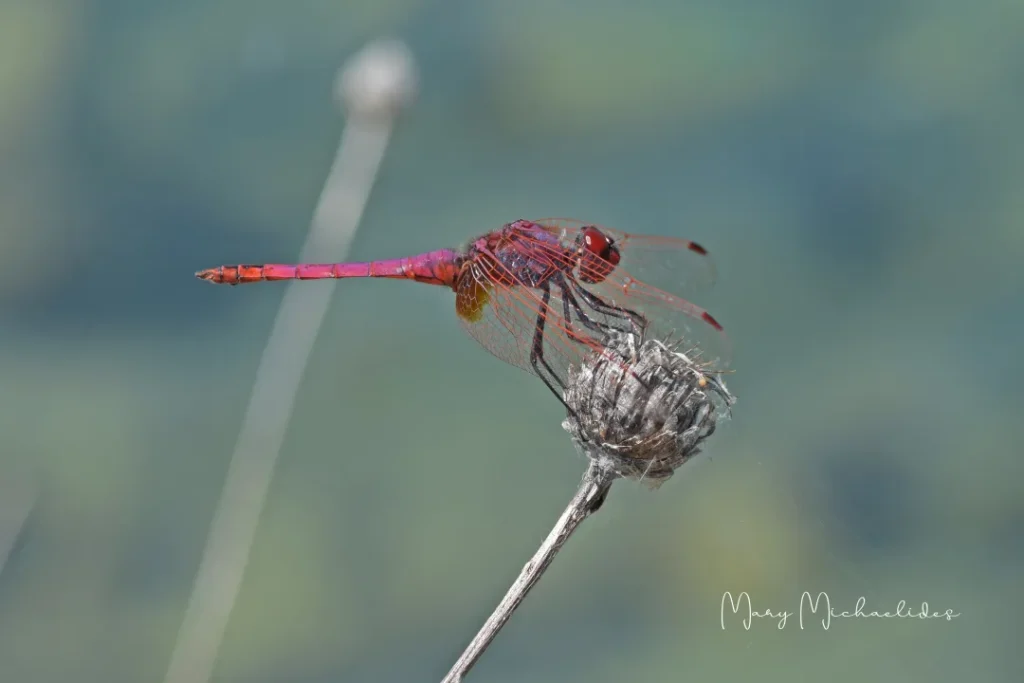
Nicosia, Cyprus. Dragonflies have been on Earth for about 300 million years, and a member of the Cyprus Dragonfly Study Group describes how joining the project in 2017 reshaped their understanding of the insects. The account highlights citizen-science monitoring, species found in Cyprus, and the role of Odonata in ecosystems.
Citizen science monitoring in Cyprus
After joining the Cyprus Dragonfly Study Group, the author and their partner were expected to visit the same locations at least once a month and count dragonflies. The work involved training and instructions to record species, producing data used by scientists to extract phenology, trends and changes in insect populations. The author said the task was initially daunting but became easier over time, including learning to recognise all species found in Cyprus.
Species in Cyprus and worldwide
The author said as many as 32 dragonfly species can currently be seen flying in Cyprus. The Cyprus dragonfly list (Order Odonata) includes 37 species, with six not seen for some years and one that has only recently arrived on the island. Worldwide, there are about 5,500 known species.
Habitats and predatory behaviour
In some villages in Cyprus, dragonflies are called “angels,” but the author described them as ferocious, indiscriminately carnivorous and voracious predators, both as aquatic nymphs and as flying adults. The author said dragonflies spend most of their lives in water, which is why adults—mostly males—are usually seen close to freshwater habitats such as rivers, streams, ponds and lakes, often among reeds.
Ecological role and habitat indicators
The author said dragonflies, like all insects, lie at the base of the food chain and are vitally important. The text cited Harvard biologist Edward O Wilson as saying that if humankind disappeared, the world would regenerate, but if insects vanished, the environment would collapse into chaos. The author added that Odonata are key indicators of the health of both aquatic and terrestrial habitats and are considered model organisms for assessing the effects of global climate change.
Dragonflies and damselflies: key distinctions
The text said Odonata are divided into two suborders: Anisoptera (“dissimilar wings”) and Zygoptera (“similar wings”), with Zygoptera commonly called damselflies in English. Anisoptera hold their wings open when at rest, while Zygoptera usually hold them closed. The author said another difference is the eyes: in Anisoptera they are usually touching, while in Zygoptera they are widely separated.
Size, vision and flight abilities
Anisoptera can be large insects, and the biggest species found in Cyprus—and the largest in Europe—is Anax immaculifrons (the Magnificent Emperor), measuring 80–86 mm, according to the text. The author said Odonata have the largest eyes relative to body size of any animal and are among the most effective predators in the animal world, with a success rate of up to 95 per cent. The author also described them as superb fliers, able to dive, hover, fly backward and upside down, and pivot 360 degrees by using their wings independently, and said they scoop up prey with their legs and consume it in flight unless it is too large. In general, the author said, Anisoptera are stronger and faster fliers than Zygoptera.
What observations about dragonflies near freshwater habitats have you noticed in Cyprus?