


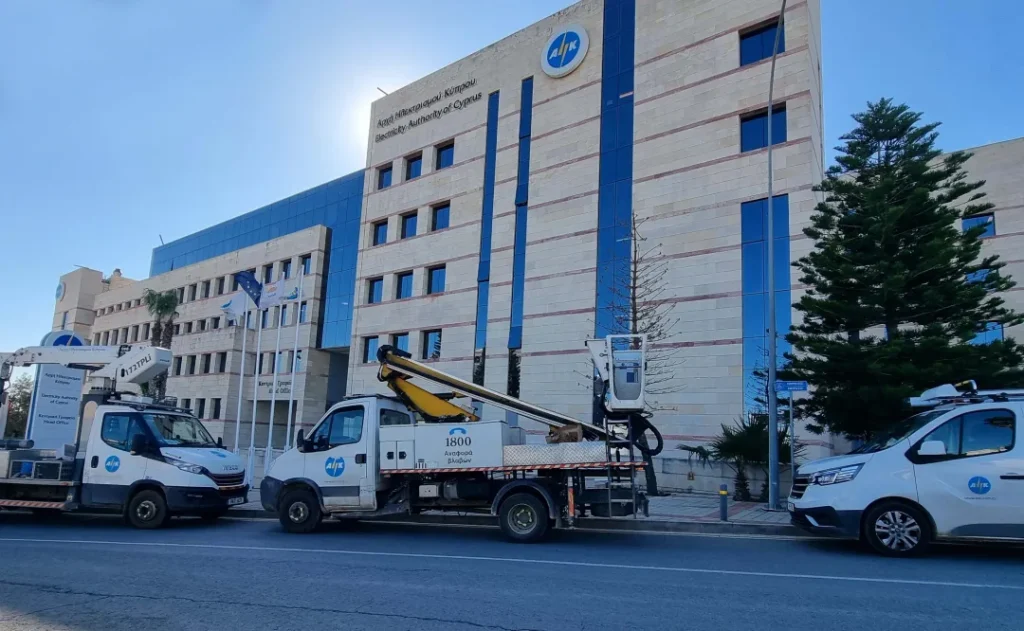
Nicosia, Cyprus. Workers at the electricity authority (EAC) went on strike for two hours on Friday morning, protesting what they described as “erratic” government policies in the energy sector and plans to allow the Cyprus telecommunications authority (Cyta) to enter the energy market.
Unions warn of worsening conditions
Trade unions sent a letter to EAC general manager Adonis Yiasemides, warning that the situation in Cyprus’ energy sector is “getting worse … at a time when the people are watching a worsening energy shortage and a continuous increase in the price of energy”.
They said plans to allow Cyta to enter the energy market are based on a “myth” that Cyta will “sell ‘cheap electricity’”, and cited what they described as a “multitude of pending labour issues” that are “hindering the smooth operation and effectiveness” of the EAC.
Cyta cites renewable energy access
Cyta said it aims to enter the energy market to provide access to renewable energy for people who would not be able to install solar panels at their place of residence.
Earlier this week, Cyta workers’ trade unions urged parliament to pass legislation allowing Cyta to enter the energy market, warning that if such legislation is not passed, “society will miss the chance for more, cleaner and cheaper energy options”.
Competition concerns and market opening
The competition protection commission has warned against the plans, with a commission representative telling the House finance committee earlier this month that such a move would damage Cyprus’ fledgling “open” energy market, which came into being last year.
Since October, private companies have been able to enter the energy market and provide services, with the energy regulatory authority (Cera) saying at the time that the change would allow “all parties, producers, suppliers, and end customers” to be “free to decide among themselves … how to manage and pay for the electricity they produce”.
Questions over prices and the ‘target model’
Questions were raised at the time over whether opening the energy grid would reduce consumers’ bills, but energy minister of the day George Papanastasiou said he “cannot tell” whether this will happen.
“If you ask the minister whether prices will go down, that will depend very much on how the parties compete in a small market in which he decided to apply the ‘target model’,” he said.
The ‘target model’ aims to create a unified electricity market across the European Union, with all 27 member states’ electricity grids open to private companies, with the hope that widespread competition will drive down prices for consumers across the bloc.
What impact do you think further changes to Cyprus’ energy market could have on electricity prices?