


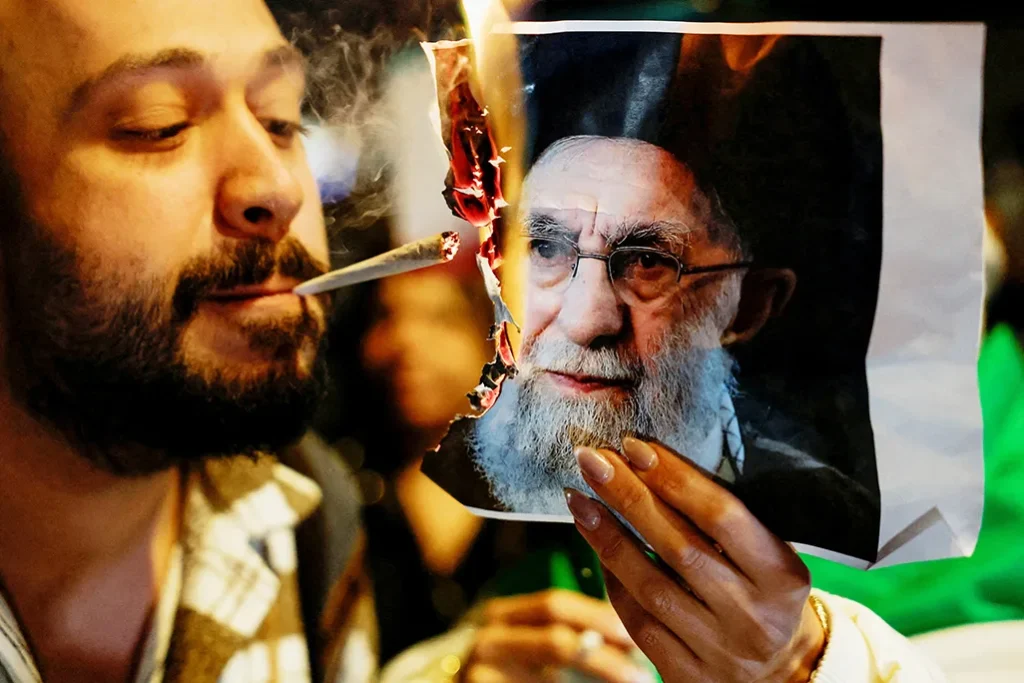
Brussels, Belgium. European Union foreign ministers adopted new sanctions on Iran on Thursday targeting individuals and entities linked to a violent crackdown on protesters and Iran’s support to Russia, EU diplomats said. Ministers are also expected to reach a political agreement to include the Islamic Revolutionary Guard Corps (IRGC) on the EU list of terrorist organisations.
New sanctions target officials and censorship entities
French Foreign Minister Jean-Noel Barrot said in a post on social media platform X that the sanctions include members of the Iranian government, judiciary, police and the IRGC, as well as entities responsible for internet censorship.
Expected political agreement on IRGC listing
The EU’s foreign ministers are expected to reach a political agreement on Thursday to add the IRGC to the bloc’s list of terrorist organisations, placing the guards in a category similar to that of Islamic State and al Qaeda and marking a symbolic shift in Europe’s approach to Iran’s leadership.
“If you act as a terrorist, you should also be treated as a terrorist,” EU foreign policy chief Kaja Kallas said ahead of the gathering in Brussels.
Role and influence of the IRGC
Set up after Iran’s 1979 Islamic Revolution to protect the Shi’ite clerical ruling system, the IRGC has significant influence in Iran, controlling parts of the economy and the armed forces. The guards were also put in charge of Iran’s ballistic missile and nuclear programmes.
Divisions among member states and recent shift
Some EU member states have previously pushed for the IRGC to be added to the EU’s terrorist list, while others have been cautious, citing concerns it could hinder communication with Iran’s government and endanger European citizens inside the country.
A crackdown on a nationwide protest movement earlier this month, described by ministers as brutal and involving thousands killed, increased momentum for the move.
“It’s important that we send this signal that the bloodshed that we’ve seen, the bestiality of the violence that’s been used against protesters, cannot be tolerated,” Dutch Foreign Minister David van Weel said on Thursday morning.
France and Italy, which were previously reluctant to list the IRGC, lent their backing this week.
Diplomatic channels
Despite concerns from some capitals that listing the IRGC could lead to a complete breakdown in ties with Iran, Kallas told reporters that “the estimate is that still the diplomatic channels will remain open, even after the listing of the Revolutionary Guards”.
What impact do you think the EU’s expected political agreement on listing the IRGC could have on EU-Iran relations?