


Brussels, Belgium. Ambassadors from the European Union’s 27 countries agreed on Friday to advance membership talks with Ukraine and Moldova, with the first phase of negotiations set to begin on Monday. The decision allows both countries to open the first cluster of policy areas in the accession process.
Agreement by EU ambassadors
At a meeting in Brussels on Friday, the ambassadors agreed that Ukraine and Moldova can begin talks on the first “cluster” of policy areas in which they must reform their laws to meet EU standards.
EU leaders had agreed in December 2023 to open accession talks with Ukraine and Moldova, but negotiations did not begin due to opposition from the previous Hungarian government to Kyiv’s membership bid.
Hungary lifts its block
A new government in Budapest reached an agreement with Kyiv this month on the rights of the Hungarian minority in Ukraine. The agreement cleared the way for Hungary to remove its opposition to the first phase of membership talks.
Structure of the accession process
In the EU accession process, candidate countries negotiate policy “chapters” grouped into six thematic clusters. These cover areas including fundamental rights, the internal market and external relations.
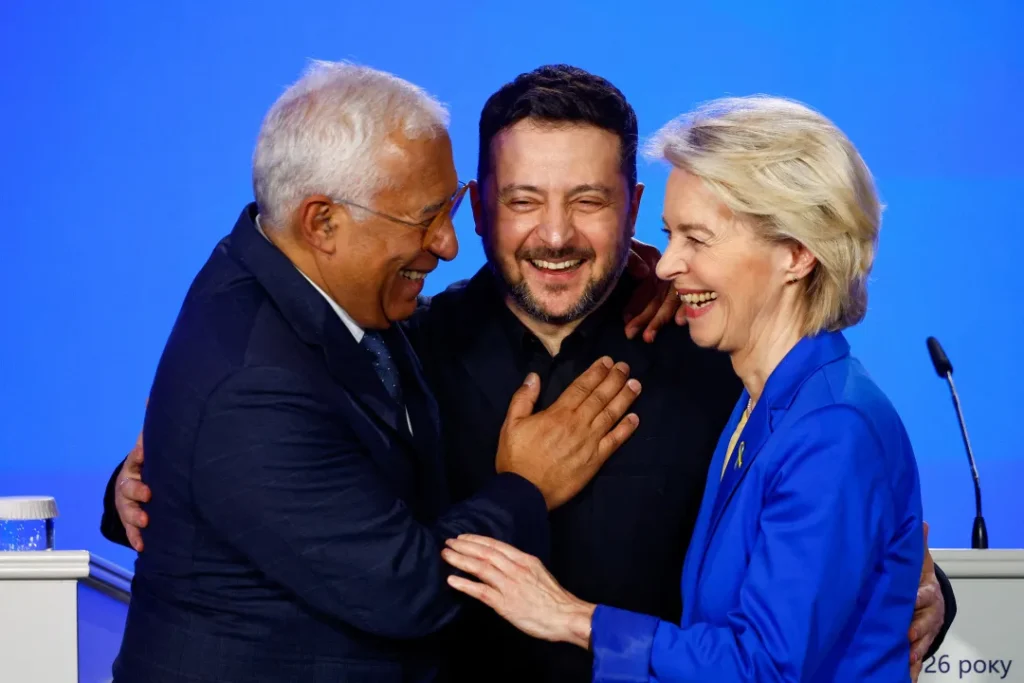
Antonio Costa, president of the European Council, and Ursula von der Leyen, president of the European Commission, said in a joint statement: “Today, the European Union took a major step forward.”
“At the first Intergovernmental Conference on Monday, we will open the cluster on fundamentals; the backbone of the accession process,” they said.
Ukraine’s strategic goal
As Ukraine continues to fight Russia’s invasion, President Volodymyr Zelenskiy has made EU membership a central strategic objective aimed at anchoring the country in Europe’s political mainstream.
EU accession negotiations are often lengthy and involve years of work to implement reforms and meet European standards.
Costa and von der Leyen said Friday’s decision was “a recognition of the determination, courage and hard work shown by both countries in advancing reforms, even in the face of immense challenges. And a signal that the EU’s offer of peace, stability and opportunity is unmatchable”.