


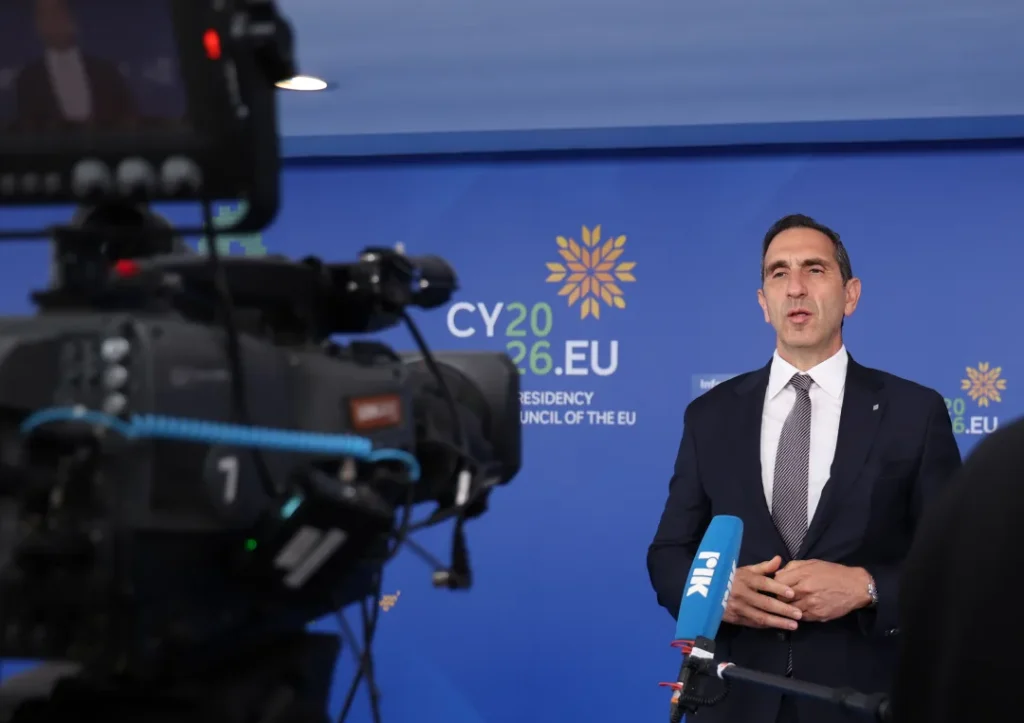
Nicosia, Cyprus. Investment in the European Union’s housing sector is falling short of what is needed to meet rising demand, Interior Minister Constantinos Ioannou said as EU housing ministers met in Nicosia. He said an additional €650 billion per year is required.
Meeting agenda and objectives
Speaking ahead of the informal meeting, which he chaired under the Cypriot Presidency of the Council of the EU, Ioannou said the housing crisis and lack of affordable homes constitute a shared European challenge requiring a coordinated response.
He said the two issues to be discussed aim at increasing housing supply to achieve a balance between supply and demand. The first topic is reducing bureaucracy and delays in licensing procedures by simplifying processes. The second concerns investment, including boosting public and private resources and making better use of European funding tools.
Ioannou said the meeting aimed to serve as a starting point for dialogue and to identify actions that can strengthen national plans to address the housing problem.
Housing as a social and economic issue
In opening remarks to participants, Ioannou said housing is not merely a commercial product but “a cornerstone of human dignity”. He said access to adequate and affordable housing is a fundamental pillar of social cohesion and an essential component of the European social model, adding that it is also a driver of economic growth and key to mobility, particularly for young people and workers.
Rising pressures and administrative complexity
Ioannou said challenges are becoming increasingly complex, citing rising prices, limited supply, high construction costs and demographic pressures, which he said are making access to affordable housing more difficult not only for vulnerable groups but also for the middle class.
He said administrative complexity is a major contributing factor, delaying both new developments and renovations. He cited lengthy procedures, overlapping responsibilities and limited administrative capacity as factors that create uncertainty, increase costs and negatively affect both investors and households.
Ioannou said simplification should not come at the expense of regulation, but should strike a balance with environmental sustainability and social cohesion.
Questions raised for discussion
Ioannou posed questions for discussion, including which regulatory barriers most affect housing production and renovation at national level, and which simplification measures have proven most effective in reducing delays and improving predictability, particularly for affordable housing projects.
Which regulatory barriers in your country most affect housing production and renovation?