


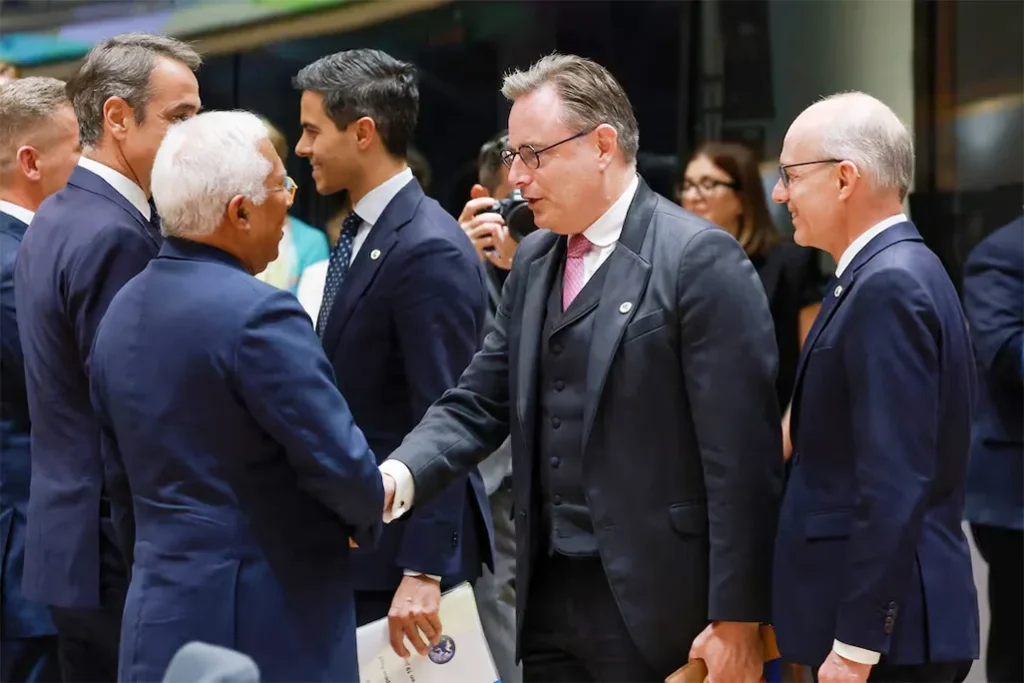
Brussels, Belgium. European Union leaders headed into talks on Friday amid divisions over the bloc’s proposed 2028-2034 budget, as both net contributors and beneficiary countries criticised the plan’s size and priorities.
Budget proposal draws criticism
The European Commission has proposed a budget of €2 trillion ($2.3 trillion) for 2028 to 2034. The budget finances policies across the 27-member bloc, including support for farmers, technology development, student exchange programmes and measures aimed at equalising living standards across member states.
Every seven years, EU member states must unanimously agree on the budget. Richer member states generally pay more into the budget than they receive, while poorer countries receive more than they contribute, often leading to difficult negotiations between the two groups.
Cypriot compromise fails to bridge divisions
A first compromise proposal prepared last week by the Cypriot EU presidency reduced the Commission’s proposal by 2%. The reduction, however, was criticised by both sides, with some countries saying it did not go far enough and others saying it went too far.
German Chancellor Friedrich Merz, whose country is the biggest net contributor to the EU budget, said as he arrived for Friday’s talks that the proposal was “far too high”.
“The figures need to be brought down,” Merz told reporters.
Spending priorities under scrutiny
The Cypriot proposal also directs more funding within the budget to farmers and cohesion policies, while reducing the share available for areas including research and innovation.
That approach has drawn criticism from countries seeking greater investment to help compete with industries in the United States and China. The Netherlands, another net contributor, opposed the compromise outline, saying it focused too heavily on traditional spending rather than newer priorities such as defence and modernisation.
“We all want a Europe that is more secure and more competitive, and we need a budget that fits that,” Dutch Prime Minister Rob Jetten said on arriving at the EU summit. “We can’t do it with a budget from the 1990s,” he added.