


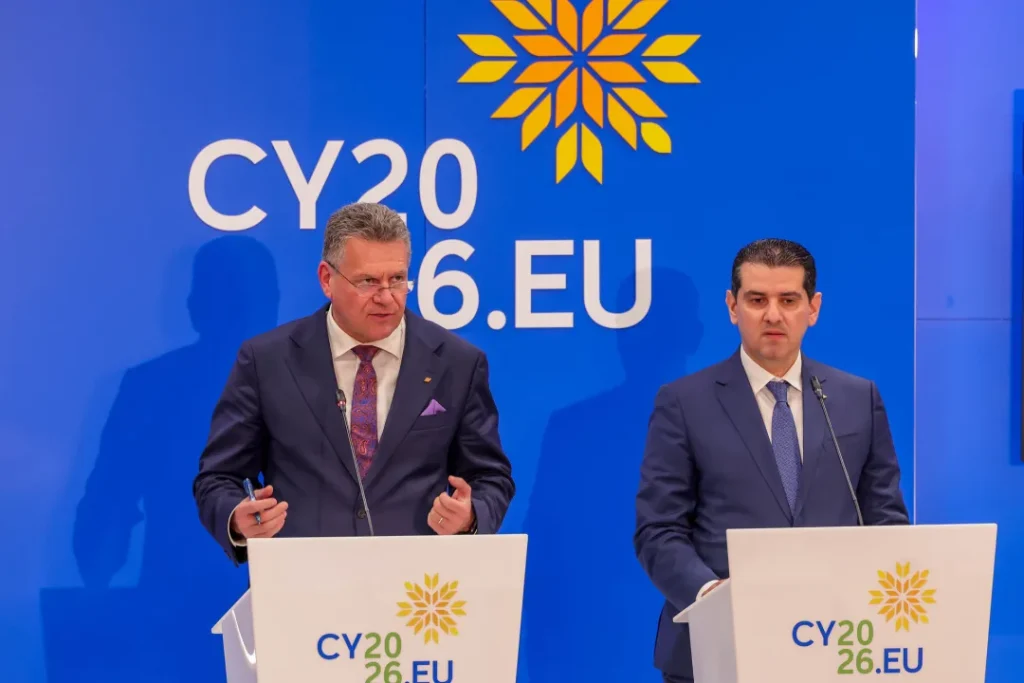
Nicosia, Cyprus. European Trade Commissioner Maros Sefcovic said the European Union has lost nearly €300 billion in projected economic gains due to the bloc’s failure to ratify a trade agreement with the South American trade bloc Mercosur. He made the remarks in Nicosia on Friday.
Sefcovic cites projected GDP and export losses
Sefcovic said at a joint press conference with Cypriot Trade Minister Michael Damianos that the EU has “lost almost €300 billion” because it does not have an agreement in place with Mercosur. He later clarified that the figure refers to the amount the EU had been projected to gain in gross domestic product between 2021 and now.
He added that the loss is accompanied by more than €200 billion in lost export opportunities.
Criticism of ratification timeline and ECJ referral
Sefcovic said that once complex negotiations are concluded, the EU cannot wait years for agreements to enter into force, referring to delays after the European Parliament’s decision to refer the EU–Mercosur trade deal to the European Court of Justice.
With the court possibly not set to deliver a ruling on the legality of the trade deal until 2028, he said he did not think the EU could operate with that timetable. He said the approval process for trade deals should be reduced to about a year after negotiations are concluded.
Cyprus minister outlines expected benefits for the country
Damianos did not address the Mercosur trade deal at Friday’s press conference, but earlier told the Cyprus Mail that the agreement would create clear and substantial benefits for the Republic of Cyprus in trade and services amid increased international uncertainties.
He said the deal would strengthen Cyprus’ security of supply for critical raw materials, noting that almost all of the country’s imported soybeans come from Argentina and that a significant part of imports of coffee and fruit juices come from Brazil.
Damianos said that reducing or eliminating tariffs and establishing predictable rules would ensure greater price stability and better conditions for Cypriot farmers, livestock breeders, and consumers. He also said the deal would create new prospects for exports of Cypriot products and services through the abolition of export tariffs on products sent from Cyprus to South America.
How do you think the EU should balance legal scrutiny with faster approval of trade agreements?