


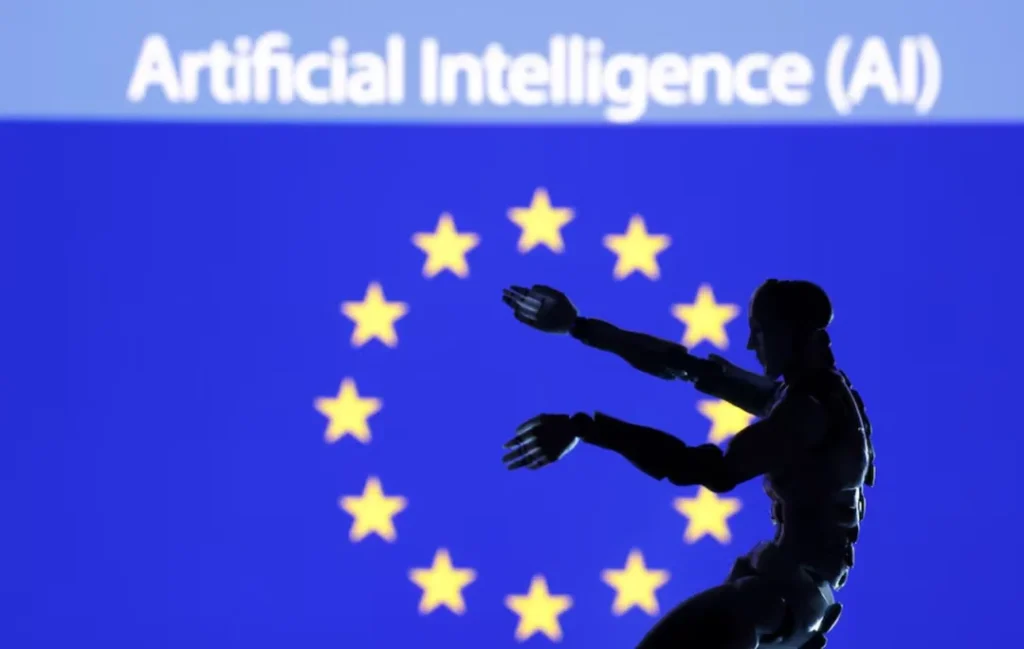
Brussels, Belgium. EU governments and lawmakers reached a tentative agreement after nine hours of negotiations to simplify parts of the bloc’s AI Act, with formal endorsements still required in the coming months. The deal includes delayed deadlines for some provisions and new restrictions on certain AI-generated sexually explicit content.
Endorsement still required
The tentative agreement needs to be formally endorsed by EU governments and the European Parliament in the coming months.
Marilena Raouna, Cyprus’s deputy minister for European affairs, said in a statement that the agreement on the AI Act would support companies by reducing recurring administrative costs. Cyprus currently holds the rotating EU Council presidency.
Commission push to simplify digital rules
The changes are part of the European Commission’s push to simplify new digital rules. The simplification drive followed complaints from businesses about overlapping regulations and red tape affecting their ability to compete with U.S. and Asian rivals.
The AI Act entered into force in August 2024, with key elements to be enforced in stages.
Delays for high-risk systems and exclusion of machinery
EU governments and lawmakers agreed to delay rules on high-risk AI systems, including those involving biometrics or related to critical infrastructure and law enforcement, to December 2, 2027, from a previous deadline of August 2 this year.
They also agreed to exclude machinery from the AI Act, citing existing sectoral rules, following pressure from businesses.
Ban on certain sexually explicit AI practices and watermarking
The agreement included a ban on AI practices that create unauthorised sexually explicit images, following such content generated by Elon Musk’s xAI chatbot Grok on X and sexually intimate deepfakes produced by Grok. The ban will apply from December 2.
Dutch lawmaker Kim van Sparrentak said the measure would protect people, especially women and girls, from nudifier apps on the EU market.
Mandatory watermarking of AI-generated output will also apply from December 2.
Act remains among the strictest globally
The AI rules were triggered by concerns about the technology’s impact on children, workers, companies and cybersecurity, and remain the strictest in the world even after the changes.
What do you think the delayed deadlines and new restrictions will mean for AI developers and users in the EU?