


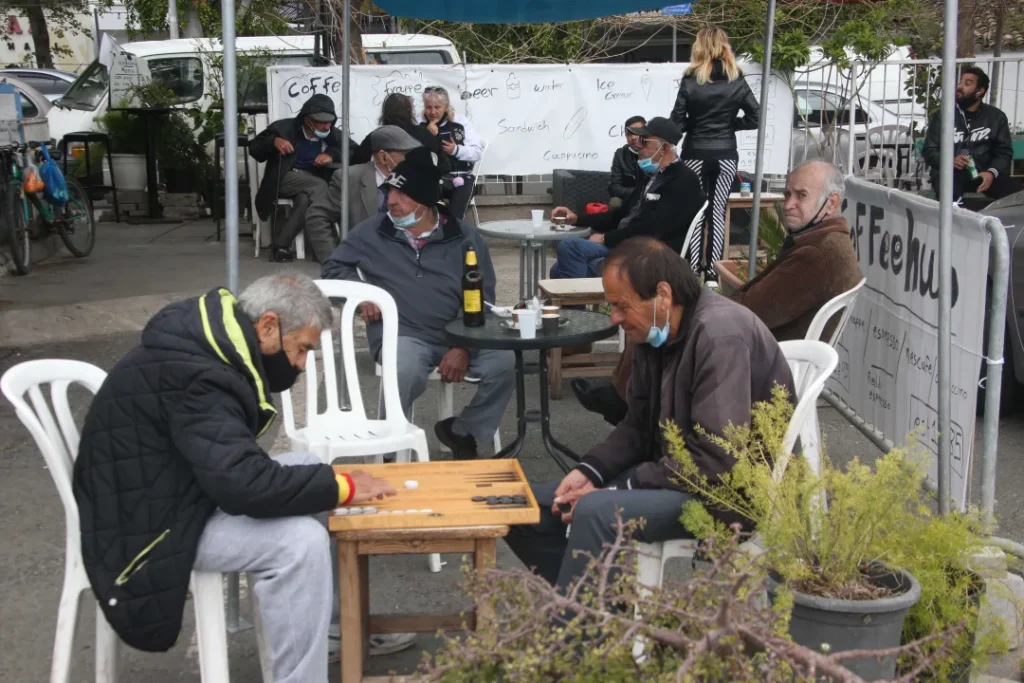
Nicosia, Cyprus. Cypriots are among Europeans increasingly concerned about the future amid heightened geopolitical tension and are calling for a more decisive EU response, according to a Eurobarometer survey published on Wednesday.
Security and instability top concerns
In Cyprus, 80 per cent of respondents said they were mostly worried about armed conflicts, 77 per cent about terrorism, 80 per cent about natural disasters linked to climate change, 70 per cent about cyberattacks, and 86 per cent about unchecked migration.
Across the EU, armed conflicts topped the list at 72 per cent, followed by terrorism at 67 per cent, natural disasters linked to climate change at 66 per cent, cyberattacks from non-EU countries at 66 per cent, and unchecked migration at 65 per cent.
Pessimism about the world, optimism at a personal level
The survey found that 52 per cent of Europeans were pessimistic about the world’s future, while 39 per cent were pessimistic about the future of the EU. In Cyprus, pessimism about the future of the world was 58 per cent and pessimism about the EU was 48 per cent.
At a personal level, 76 per cent of EU citizens said they were optimistic about their own future and that of their families, compared with 75 per cent in Cyprus.
Digital and information-related threats
Concerns linked to information and digital communications were reported at high levels. Misinformation was a serious concern for 69 per cent of EU citizens and 82 per cent of Cypriots.
Hate speech was a concern for 68 per cent of Europeans and 71 per cent of Cypriots. Deepfakes were cited by 68 per cent in the EU and 84 per cent in Cyprus. Inadequate protection of personal data concerned 68 per cent in the EU and 82 per cent in Cyprus, while threats against freedom of expression concerned 67 per cent in the EU and 73 per cent in Cyprus.
Call for greater unity and policy priorities
The survey showed demand for a stronger EU, with 89 per cent of respondents in the EU and 95 per cent in Cyprus saying member states should address international challenges with greater unity.
The cost of living also featured prominently. In the EU, 41 per cent listed inflation, high prices and the cost of living as the top priority for the European Parliament to address, compared with 34 per cent in Cyprus.
This was followed by the economy and new jobs, cited by 35 per cent of Europeans and 43 per cent of Cypriots.
Which of these issues do you consider the top priority for the European Parliament to address?