


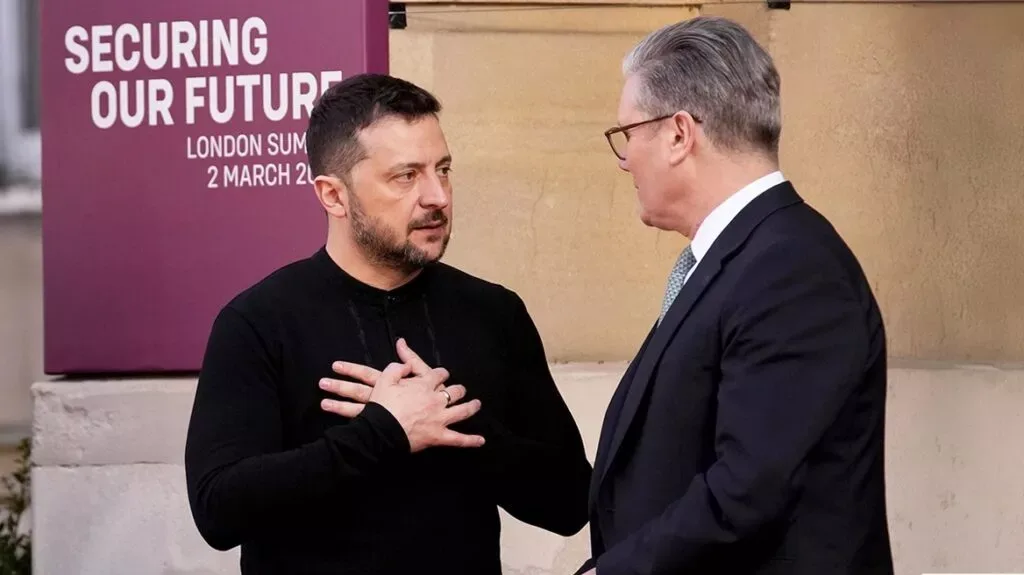
London, United Kingdom. Outgoing British Prime Minister Keir Starmer announced his departure on Monday amid plunging approval ratings, drawing warm responses from European leaders who had found him easier to work with than some of his recent predecessors.
Starmer, the first non-Conservative prime minister since Britain voted to leave the European Union, rejected suggestions that the country could rejoin the bloc but sought to improve relations after Brexit and maintained Britain’s central role in support for Ukraine.
European leaders respond
European Commission President Ursula von der Leyen praised Starmer in a post on X.
“It can take many leaders years to grow into the statesman you became in just two years,” von der Leyen said. “European and Ukrainian security is stronger because of you. Thank you, dear Keir.”
Irish Prime Minister Micheál Martin also acknowledged Starmer’s role in improving ties.
“I want to acknowledge the significant role Keir played in resetting the Irish-British relationship as well as relations between the UK and the European Union during his time as prime minister,” Martin said in a statement.
Relations with Europe
Starmer sought to improve Britain’s relationship with the European Union following the divisions caused by Brexit, while ruling out a return to the 27-member bloc.
European leaders generally found him easier to work with than his recent predecessors.
Support for Ukraine
Starmer kept Britain at the center of regional support for Ukraine alongside French President Emmanuel Macron and German Chancellor Friedrich Merz, as part of the “E3” group of leaders.
His backing for Ukraine continued the policy followed by Conservative predecessors including Boris Johnson, who supported Ukrainian President Volodymyr Zelenskiy after Russia’s assault on Kyiv in 2022.
Domestic pressures
Starmer came to office in 2024 after a sweeping election victory over a deeply unpopular government that had overseen a weakening economy and a country still divided by the Brexit referendum campaign.
Like other European leaders, he struggled to win over voters disillusioned with mainstream parties and increasingly attracted to anti-establishment movements promising major political change.
While his perceived lack of charisma appeared to matter less abroad, he was frequently accused at home of lacking conviction.