


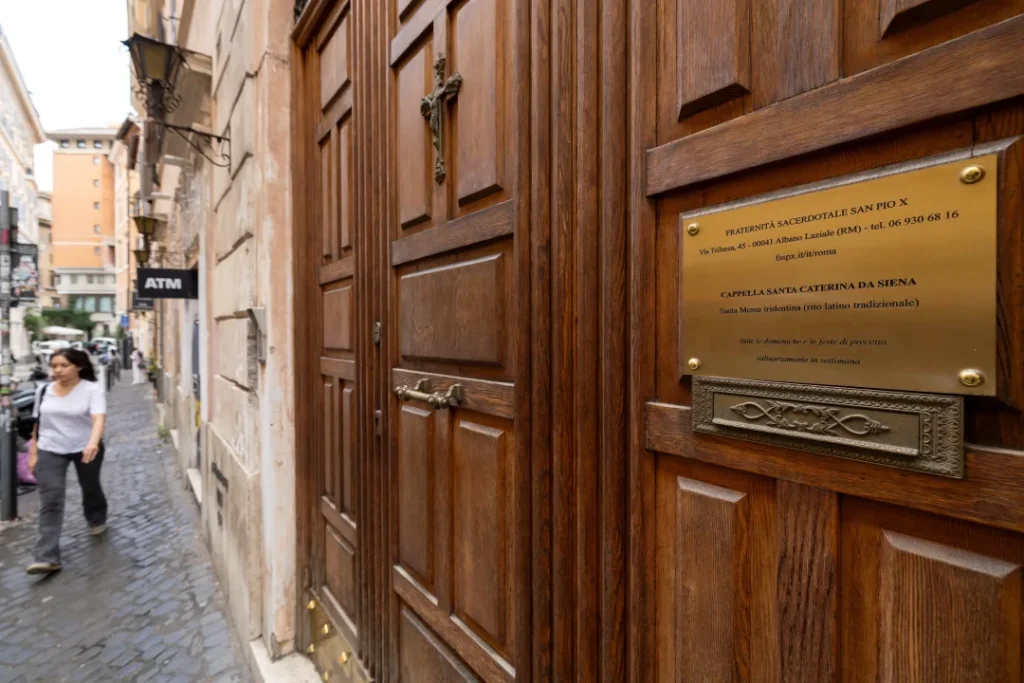
Wil, Switzerland. A priest from the Society of St. Pius X told worshippers on Sunday that the excommunicated breakaway Catholic group expected to be welcomed back into the Church under a future pope. The group was excommunicated earlier this week after four bishops were ordained without Pope Leo’s approval.
Priest addresses worshippers after excommunication
Georg Kopf made the remarks during a mass in the north-eastern Swiss town of Wil. He said the group believed that a future pope would reopen the door to reconciliation.
“There will one day be another pope who opens the door and welcomes us back. Just like Pope Benedict,” Kopf said.
He added: “I am convinced that there will be another pope like him who will give tradition its rightful place again. Of course, we’d like that to happen tomorrow.”
Background on the group
Established in 1970, the Society of St. Pius X is based in Switzerland and has followers worldwide. The ultra-conservative Catholic group accuses the Church of straying from the true faith, practices old-style Latin Mass and rejects formal dialogue with non-Catholics.
The group said Pope Leo had failed to hear its concerns and has remained unrepentant over the schism with Rome.
Previous rupture with the Vatican
The Society of St. Pius X has previously experienced a break with the Vatican. In the late 1980s, its founder Marcel Lefebvre consecrated four bishops without the approval of Pope John Paul II, leading those involved to be excommunicated.
Those bishops were later welcomed back in 2009 when Pope Benedict XVI lifted the judgment as part of an effort toward unification.
Vatican response
The Vatican said dialogue had been offered to the group before the schism and said the ordination of bishops without Church approval was so serious that excommunication was automatic.
Kopf said in a sermon delivered in German that the ordinations were not intended to create a parallel church or break with Rome.
“Nothing that happened on July 1 was intended to establish a parallel church or to break with Rome,” Kopf said. “On the contrary, it was precisely out of love for the Church and the pope that these ordinations were carried out, in order to look after the salvation of souls.”