


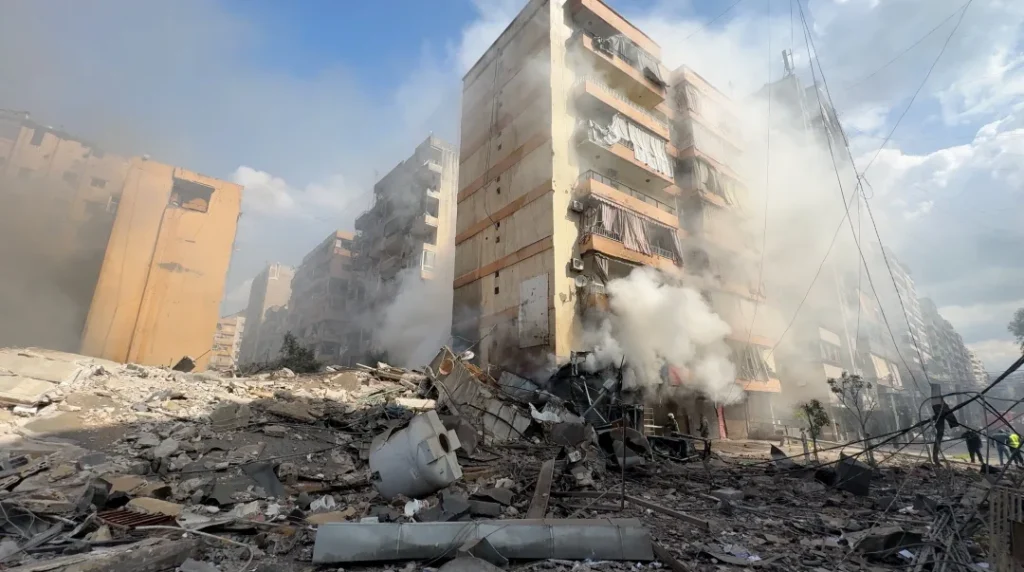
Beirut, Lebanon. Hezbollah’s decision to enter the Middle East war in support of Iran has opened a rift with its main political ally in Lebanon, leaving the group increasingly isolated as the country faces another conflict with Israel.
Attack and Israeli retaliation
Hezbollah, founded by Iran’s Revolutionary Guards in 1982, launched rockets and drones into neighbouring Israel on Monday, saying it was to avenge the killing of Iran’s Supreme Leader Ali Khamenei.
Israel retaliated, killing dozens of Lebanese and displacing tens of thousands, 15 months after a previous war that devastated Lebanon and deepened its economic crisis.
Domestic divisions over Hezbollah’s role
The latest escalation has sharpened splits in Lebanon over Hezbollah’s status as an armed group, a position that for decades made it Lebanon’s most powerful political player and a regional military force.
Critics in Lebanon have long described Hezbollah as a “state-within-a-state,” arguing it repeatedly plunges the country into conflict by fighting with Israel while remaining better armed than Lebanon’s army.
Rift with Nabih Berri and constituency frustration
The attack strained ties with Parliament Speaker Nabih Berri, a Shi’ite politician who has aligned politically with Hezbollah for decades, according to four Lebanese sources familiar with the rift.
Interviews with more than a dozen Shi’ite Lebanese, including Hezbollah loyalists, indicated wider frustration in Hezbollah’s core constituency over the attack.
Claims of Lebanese decision-making and internal briefing issues
Facing criticism that it had put Iran’s interests first, senior Hezbollah politician Mahmoud Qmati told Lebanese broadcaster Al-Jadeed on Tuesday that the group’s “political and military decisions are Lebanese.”
However, two Lebanese political figures close to Hezbollah and a senior Lebanese security official said top Hezbollah political officials were not briefed on the intent to attack.
They said the Shura Council and Jihad Council agreed on the move but did not inform most of the party’s political leaders, leaving them “in a state of confusion” on Monday.
How do you think Lebanon’s political alliances will change as debate grows over Hezbollah’s role as an armed group?