


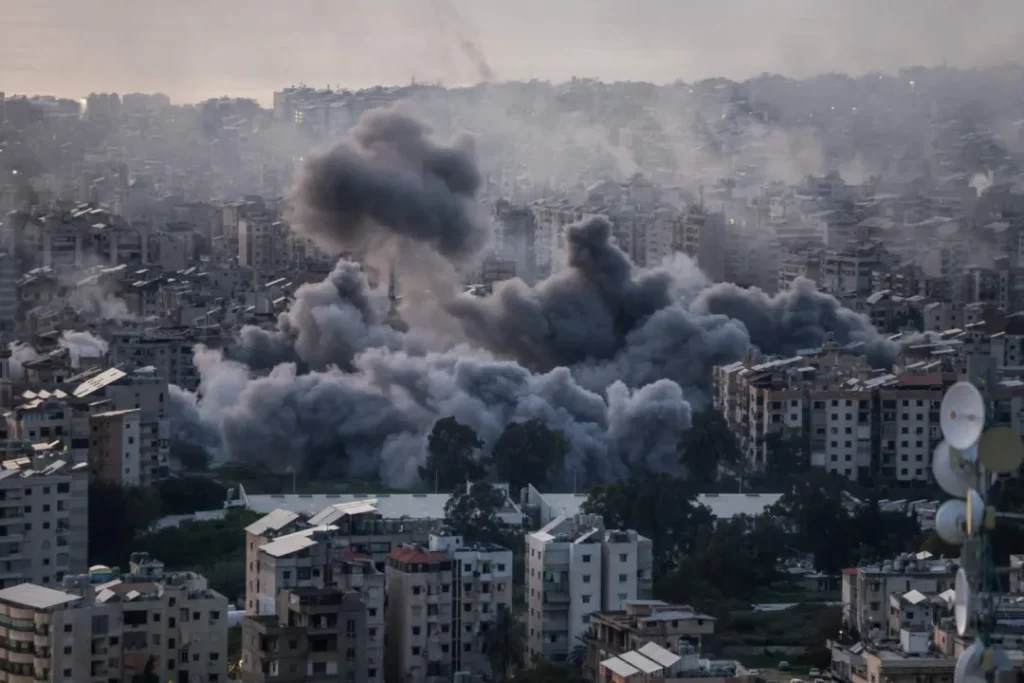
Beirut, Lebanon. Hezbollah spent months rebuilding its rocket and drone arsenal before entering the regional war, using a $50 million monthly budget largely funded by Iran and expanding local weapons production, six sources told Reuters.
Rearmament preparations and funding
The Lebanese armed group, battered in its 2024 war with Israel, concluded another conflict was inevitable and could pose an existential threat, the sources said. Fearing Israel would eventually shift its focus from Iran to Hezbollah, the group decided to strike first.
“They knew they were next on the list,” a foreign official familiar with Hezbollah’s thinking told Reuters.
The $50 million monthly budget, confirmed by two sources, was earmarked primarily for fighters’ salaries. Iranian funding also helped cover rent for about 60,000 displaced Lebanese, mostly from the Shia community that forms Hezbollah’s support base, who remained displaced after the 2024 war.
Weapons production and positioning of supplies
Hezbollah replenished its stocks through local weapons production, though an Israeli military official told Reuters its manufacturing capability had been diminished. A second foreign official said new rockets and Iranian-made logistical materials had been positioned in southern Lebanon before the latest war began.
Attacks and assessments of stockpiles
Hezbollah launched rockets and drones at Israel on Monday to avenge the death of Iranian Supreme Leader Ali Khamenei, drawing Lebanon into the war across the Middle East, a decision that caught some of its own officials off guard. The group’s media office head, Youssef al-Zein, told Reuters it would not comment on military operations but said Hezbollah had decided to “fight to the last breath.”
Hezbollah launched 60 drones and rockets on 2 March, the first day of its offensive, and a similar number the following day. By 4 March, it fired more than double that figure, which one foreign official described as a sign it had begun drawing from larger caches. Israeli think tank ALMA estimated Hezbollah’s arsenal on the eve of the attack at about 25,000 rockets and missiles, mostly short- and medium-range.
A Hezbollah video published on 4 March showed a fighter assembling a drone in a wooded area. Dubai-based defence analyst Riad Kahwaji identified it as a Shahed-101, which he said could be produced locally.
Losses, recruitment, and Israeli strikes
Despite the rearmament, Hezbollah entered the war in a weakened state. It lost 5,000 fighters in the 2024 conflict, though one Lebanese source said the group still had around 95,000 fighters.
Israeli strikes after the 2024 ceasefire targeted training camps, and in late February the Israeli military said it struck eight military compounds used by the elite Radwan force. Hezbollah had been struggling to recruit new operatives as a result, two sources said.
What impact do you think Hezbollah’s reported stockpiles and funding levels could have on the course of the conflict?