


Nicosia, Cyprus. Planning a holiday in Cyprus without a car is possible, particularly for visitors staying in one or two coastal resorts. However, renting a car provides greater flexibility for trips involving mountain villages, remote beaches or national parks.
Choosing how to travel
Whether a car is needed depends on how much of the island visitors plan to see. For shorter breaks, public transport, taxis and organised excursions may be sufficient.
Travelling without a car can reduce holiday costs, remove the need to find parking and avoid driving on the left for visitors from countries where traffic keeps to the right.
Limitations without a car
Journey times may be longer when using public transport, while rural areas have fewer transport options. Evening bus services can also be limited outside major towns.
Visitors without their own vehicle may find it more difficult to make spontaneous detours or visit off-the-beaten-track locations.
Bus network
Public transport in Cyprus relies almost entirely on buses, as the island has no train or metro services.
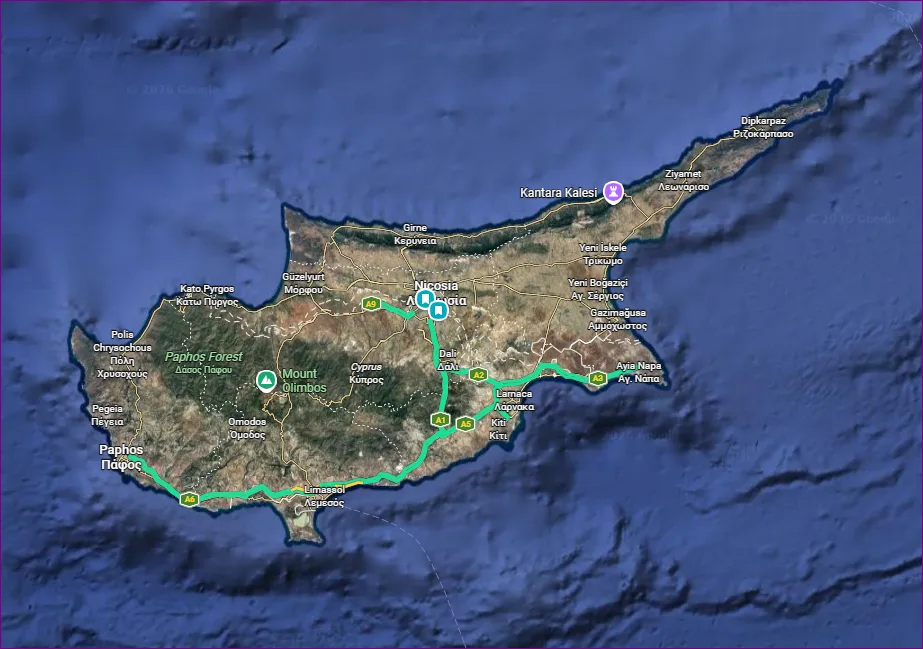
The bus network operates reliably within main towns and provides regular intercity links between Paphos, Limassol, Larnaca, Nicosia, Ayia Napa and Protaras. Tourist areas generally receive more services during summer, although frequencies decline in winter.
Intercity and local services
Intercity Cyprus buses use coaches with luggage space and air conditioning. Services between major cities typically run every 30 to 60 minutes during the day, making them an option for day trips.
Local buses connect beaches, hotels, shopping areas, airports and popular attractions in towns including Paphos, Larnaca, Limassol and the Ayia Napa-Protaras area. Evening services operate in larger resorts but become less frequent later at night.
Tickets can usually be purchased onboard, and bus tickets can be bought with cash only.