


Nicosia, Cyprus. Political podcasts in Cyprus are emerging as a new way for voters to follow politics, with hosts and analysts saying the format is reshaping how public figures are heard between elections.
Podcast reach
Christophoros Christophi, host of Legal Matters, said it was “the new way that people follow politics now.” The podcast, which launched in 2019, is widely described as the first political podcast in Cyprus and remains among the best known.
Its audience, however, is modest by mainstream media standards. Legal Matters has around 13,000 subscribers on YouTube, and also has an app and a website with an archive of all seven seasons.
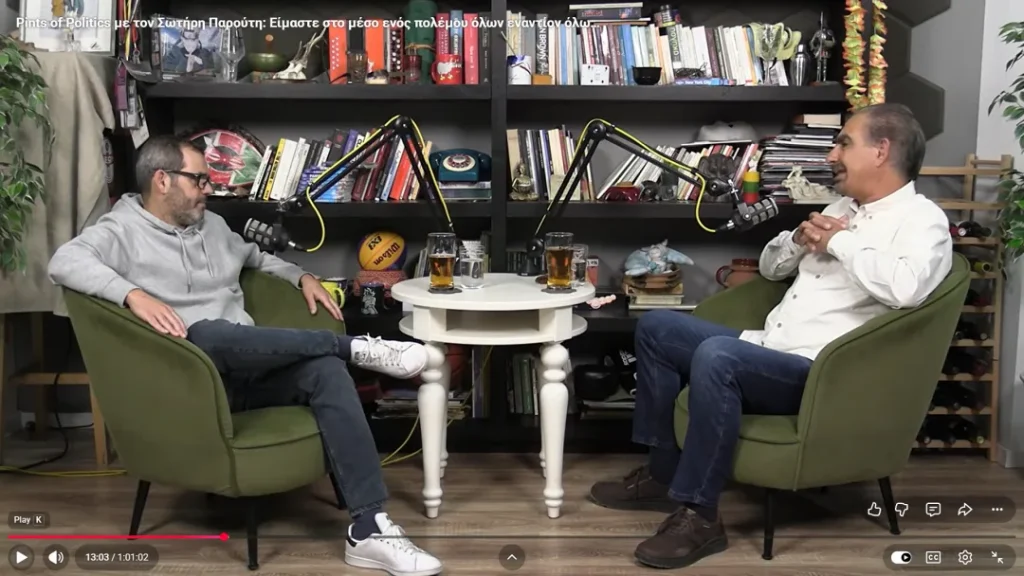
Pints of Politics, hosted by analyst and Politis columnist Antonis Polydorou, has also built an audience, with its most popular interview, with former Disy chief Averof Neofytou, drawing nearly 15,000 YouTube views. Its usual viewership is much lower, although the programme is also available on Spotify and Apple Podcasts.
Evergreen content
Constantinos Psillides, host of HistoriCon, said podcast content can continue attracting viewers long after it is published.
“our content is evergreen,” he said. “I mean, it can get viewing figures for X number of years, because it’s there… Whereas on TV, it’s a one-off – you do it, it’s done, boom, it’s over.”
The article said that this permanence can affect politics by making it easier for voters to revisit what politicians said during election campaigns.
Impact on political accountability
The article said politicians often make promises during campaigns and later do the opposite once in power. It added that television and the wider media can make it harder for voters to check those statements after the fact.
By contrast, the internet preserves those remarks, and podcasts can help pin down politicians during periods between elections, offering voters a fuller record when the next vote comes around.
Changing the format
The article said the biggest change brought by political podcasts is not only their reach, but the format itself.
Do you think political podcasts give voters a better way to judge politicians?