


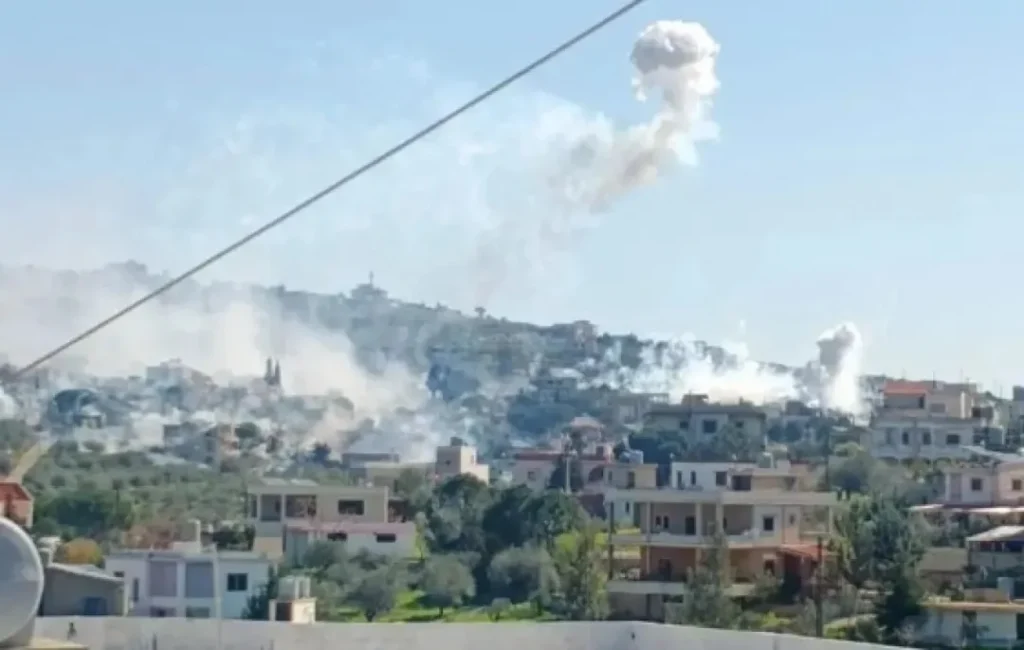
Yohmor, Lebanon. Human Rights Watch said the Israeli military unlawfully fired white phosphorus munitions over a residential area in the southern Lebanese town of Yohmor on March 3, 2026, as the death toll from the broader escalation of hostilities rose to at least 394.
Human Rights Watch findings
Human Rights Watch said it verified and geolocated eight images showing airburst white phosphorus munitions deployed over homes in Yohmor. The organisation said civil defence workers responded to fires in at least two houses and a car.
Human Rights Watch said it identified the munitions as consistent with the M825-series 155mm artillery projectile.
Warnings about civilian harm
“The Israeli military’s unlawful use of white phosphorus over residential areas is extremely alarming and will have dire consequences for civilians,” said Ramzi Kaiss, Lebanon researcher at Human Rights Watch.
“The incendiary effects of white phosphorous can cause death or cruel injuries that result in lifelong suffering.”
Human Rights Watch said white phosphorus ignites on contact with oxygen and can set homes, agricultural land and other civilian structures ablaze.
International humanitarian law concerns
Human Rights Watch said the use of airburst white phosphorus in populated areas violates international humanitarian law, which requires all feasible precautions to avoid civilian harm.
Evacuation orders
Earlier on March 3, Israel’s Arabic military spokesperson Avichay Adraee issued an evacuation order at 5:27 a.m., telling residents of Yohmor and 50 other villages and towns to move at least 1,000 metres outside their villages to open land. Adraee repeated the order at 12:12 p.m.
Human Rights Watch said it had not verified whether people were in the area or injured as a result of the white phosphorus use.
Images of firefighting response
Photographs posted to Facebook by the Civil Defense Team of the Islamic Health Committee in Yohmor, which Human Rights Watch described as affiliated with Hezbollah, showed workers extinguishing fires on residential rooftops and in a car, with smoke rising from the balconies of a home.
What do you think should be done to protect civilians when incendiary weapons are used near residential areas?