


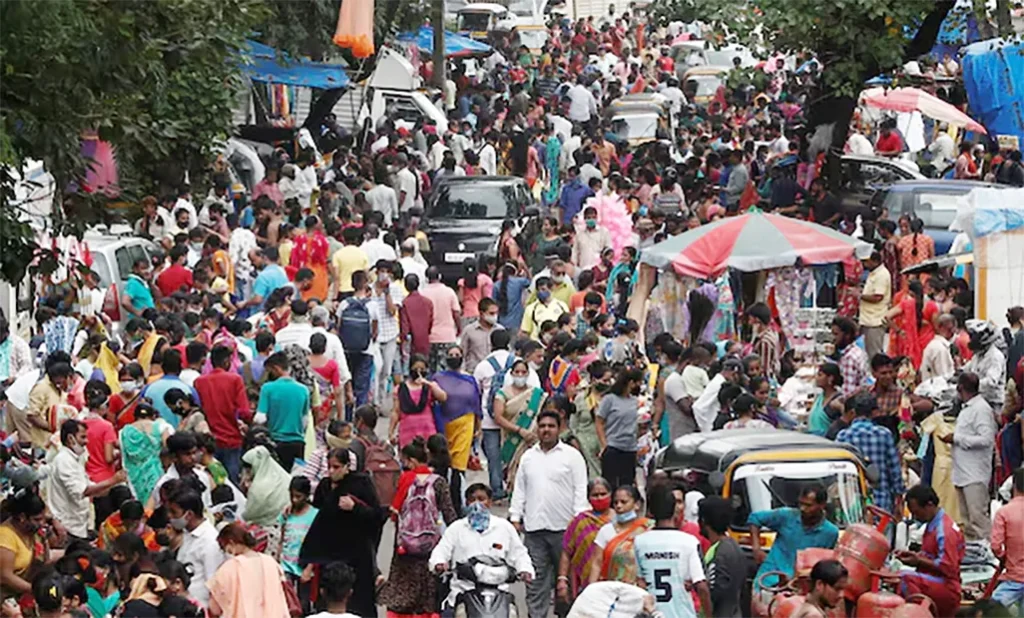
New Delhi, India. Allies of Prime Minister Narendra Modi and Hindu groups are urging larger families to counter a declining fertility rate, even as the United Nations projects India’s population will continue rising for decades.
Fertility rate trends and policy debate
India’s total fertility rate (TFR), the average number of children per woman, declined to 2 in the 2019/21 government assessment period, down from 3.4 in 1992/93, driven by increased contraceptive use and rising education among females. The government estimates a rate of 2.1 is required for the population to replace itself.
The United Nations projects India’s population will keep rising for about four decades, peaking at around 1.7 billion. Some policymakers and Hindu groups say efforts to shift away from smaller families should begin now, including through government financial support.
Andhra Pradesh announces proposed incentives
The southern state of Andhra Pradesh, ruled by a coalition of a regional party and Modi’s party, said over the weekend it would offer a one-time cash incentive of 30,000 rupees ($311.57) for a third child and 40,000 rupees for a fourth. The proposal revises an earlier plan for 25,000 rupees for a second child and no direct support for a first-born. The state did not say when the plan will be implemented.
Chief Minister Chandrababu Naidu said falling birth rates in many countries were leading to ageing populations and economic strain. “In the past, we worked extensively on family planning,” he said. “Now, given the changed circumstances, we are calling for children to be seen as wealth.”
Sikkim measures and international context
The small northeastern state of Sikkim has urged families to have more children, offering incentives including year-long maternity leave, month-long paternity leave and financial support for in-vitro fertilisation.
The United Nations says that in the mid-1980s, China, Japan, South Korea, Thailand and Turkey deemed their birth rates too high and sought to bring them down, but by 2015 changed course to promote policies to boost births.
RSS calls for bigger families
The Rashtriya Swayamsevak Sangh (RSS), a Hindu group from which Modi’s party emerged, has called for bigger families, describing it as a priority.
“We say that India is a country of youngsters … but slowly, the TFR is coming down,” RSS General Secretary Dattatreya Hosabale told reporters last week. “Demographic imbalances will create tensions.”
What do you think governments should prioritise when balancing population growth, ageing trends and economic pressures?