


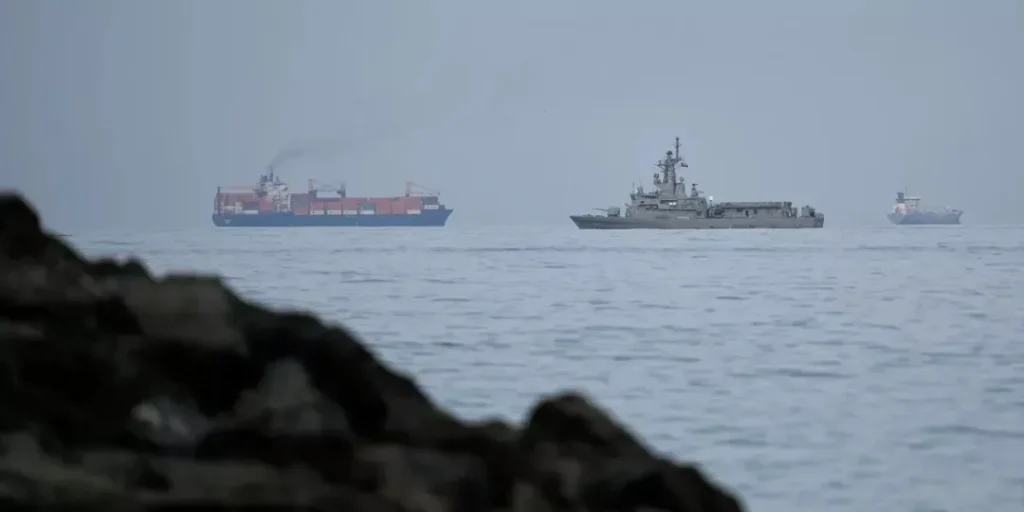
Dubai, United Arab Emirates. Iran attacked and set ablaze a fully loaded crude oil tanker off Dubai as President Donald Trump threatened to destroy Iran’s energy plants and oil wells if Tehran does not reopen the Strait of Hormuz.
Tanker strike and immediate aftermath
The strike hit the Kuwait-flagged Al-Salmi, a vessel that can carry about two million barrels of oil worth more than $200 million at current prices. Kuwait Petroleum Corp, the vessel’s owner, said the attack caused a fire and hull damage, with no reported injuries, and Dubai authorities later said the fire had been brought under control.
The attack was the latest in a series of missile and drone assaults on merchant vessels in the Gulf and Strait of Hormuz since the United States and Israel attacked Iran on 28 February.
Oil market reaction
Crude prices briefly spiked after news of the strike before retreating following a Wall Street Journal report that Trump had privately told aides he was willing to end the military campaign even if the strait remained largely closed, leaving its reopening for a later date.
Trump’s warning and diplomatic contacts
Trump issued his threat in a social media post shortly after Iran’s foreign ministry dismissed US peace proposals as “unrealistic, illogical and excessive.” He wrote that if a deal was not reached and the strait not immediately reopened, the US would conclude its military presence in Iran by destroying all of the country’s electric generating plants, oil wells and Kharg Island, and also threatened Iranian desalination facilities.
The White House said talks with Iran were continuing and making progress, with press secretary Karoline Leavitt saying what Tehran says publicly differs from what it tells US officials in private. A new deadline of 6 April has been set for Iran to open the strait.
Wider conflict and regional strikes
The month-long war has shown no sign of easing. Iran-aligned Houthis have entered the conflict by firing missiles and drones at Israel.
Turkey reported that a ballistic missile launched from Iran crossed into Turkish airspace before being intercepted by NATO air defences. Israel carried out missile strikes on what it described as military infrastructure in Tehran and on Hezbollah positions in Beirut, with explosions heard across parts of the Iranian capital and residents in the eastern Pirouzi district reporting power outages.
Iran’s military said its latest wave of strikes targeted what it described as hideouts of US military personnel at five bases across the region and in Israel.
US reinforcements and domestic impact
Thousands of soldiers from the US Army’s 82nd Airborne Division have begun arriving in the Middle East, two US officials told Reuters, as part of reinforcements that would give Trump the option of a ground assault on Iran even while diplomatic efforts continue.
The conflict has pushed US petrol prices above $4 a gallon for the first time in more than three years, according to price-tracking service GasBuddy, as tightening global supplies drive US crude above $101 a barrel, a political liability for Trump ahead of November’s midterm elections.
War funding discussions
The White House confirmed Trump was considering asking Arab nations to contribute to the cost of the war. His administration has separately requested an additional $200 billion in war funding from Congress, a measure facing significant opposition.
What impact do you think a prolonged closure of the Strait of Hormuz would have on fuel prices where you live?