


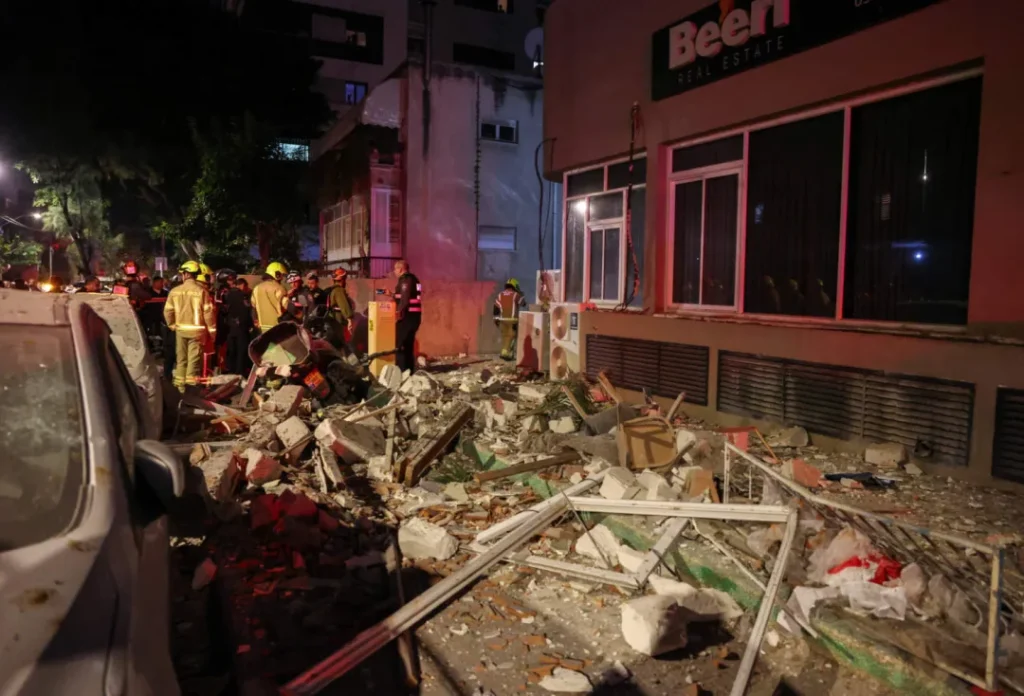
Tel Aviv, Israel. Iran fired cluster warhead missiles at Tel Aviv overnight, killing two people, Iranian state television reported on Wednesday, describing the strike as retaliation for Israel’s assassination of Iran’s security chief Ali Larijani. The attack brought the Israeli death toll from the war to at least 14.
Missile strike and reported casualties
Iran’s Islamic Revolutionary Guard Corps said it used Khorramshahr 4 and Qadr missiles equipped with multi-warheads that disperse into smaller explosives mid-air over a wide area, making them difficult to intercept. The attack hit a neighbourhood close to densely populated civilian and military areas.
Death of Ali Larijani and other officials
Larijani, secretary of Iran’s Supreme National Security Council, was the most senior Iranian figure killed since Israeli strikes on the war’s first day eliminated supreme leader Ayatollah Ali Khamenei. Iran confirmed on Tuesday that Larijani’s son and his deputy, Alireza Bayat, were also killed in the same attack.
Ceasefire proposals rejected, official says
Iran’s new supreme leader Mojtaba Khamenei has rejected ceasefire proposals conveyed to the Foreign Ministry, saying it was not the right time for peace until Washington and Israel accepted defeat and paid compensation, according to a senior Iranian official speaking on condition of anonymity.
Projectile near Bushehr nuclear power plant
A projectile struck an area near the Bushehr nuclear power plant in southern Iran on Tuesday evening, though Tehran told the International Atomic Energy Agency it caused no damage or casualties. IAEA chief Rafael Grossi renewed his call for maximum restraint to avert the risk of a nuclear accident.
Strikes in Lebanon and displacement
Israel intensified strikes across Lebanon on Wednesday, killing at least six people and wounding 24 others in Beirut alone, according to Lebanon’s health ministry. Fourteen more people were killed in separate strikes on southern and eastern areas of the country. More than 900 people have been killed in Lebanon and over 800,000 displaced since Hezbollah attacked Israel on 2 March, saying it was avenging the killing of Iran’s supreme leader.
U.S. strikes near Strait of Hormuz and political scrutiny
The United States military said on Tuesday it had bombed sites along Iran’s coastline near the Strait of Hormuz using bunker-buster munitions, citing the threat Iranian anti-ship missiles posed to international shipping. The strait, through which roughly a fifth of global oil trade passes, remains largely closed as Iran threatens vessels linked to Washington and Tel Aviv. US President Donald Trump has publicly rebuked NATO allies for refusing to join military efforts to reopen the waterway, calling their reluctance “a very foolish mistake.” The legal basis for US involvement has faced growing scrutiny, underscored by the resignation on Tuesday of Joseph Kent, head of the National Counterterrorism Center, who wrote to Trump that Iran “posed no imminent threat to our nation.”
Energy, food and aviation impacts
The International Energy Agency has described the conflict as the worst oil crisis since the 1970s. Brent crude futures have closed above $100 per barrel for four consecutive sessions, with prices up roughly 45% since fighting began on 28 February. The World Food Programme warned that tens of millions of people face acute hunger if the war continues through June. Global airlines on Tuesday warned of hundreds of millions of dollars in additional costs, higher fares and route cuts as most Middle East airspace remains closed due to the threat of missile and drone attacks.
How do you expect the continued disruption to the Strait of Hormuz to affect oil prices and daily costs where you live?