


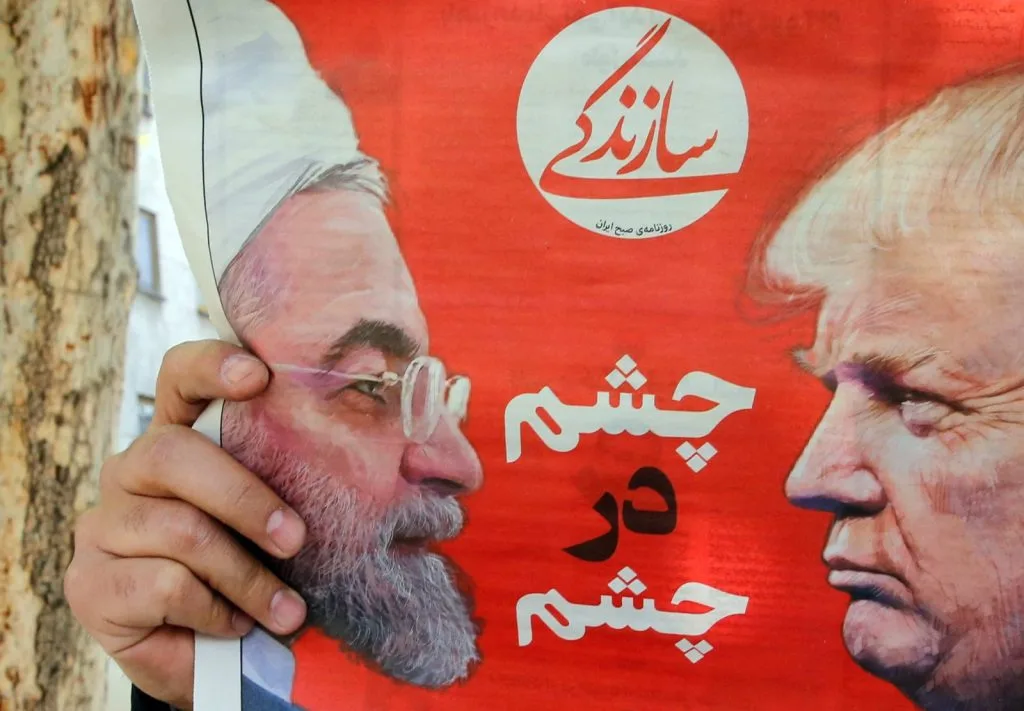
Tehran, Iran. Nearly a month after the suppression of protests in Iran, the death toll and number of arrests remain unknown amid reports of executions and expanded controls. In an interview with Phileleftheros, Ioannis Mylonelis said the confrontation is both material and symbolic, with each side denying the other’s “Iranianness”.
Unknown toll and reported executions
The death toll remains unknown, with some suggesting more than 40,000 people, mainly young people, have lost their lives on the streets of Tehran and other major cities. The number of arrests is also unknown, while there are numerous reports of hundreds of executions.
State and protesters’ competing narratives
Mylonelis, a PhD candidate in Religious Studies specialising in Islam, said the regime frames every mobilisation as the product of foreign conspiracy and hybrid warfare. He said many protesters interpret the extreme violence they face as something alien to society.
According to Mylonelis, the suppression, mass arrests, executions and digital controls have temporarily halted the momentum on the streets without eliminating deeper social fractures.
US strike threats and their potential effect
Mylonelis said that while extensive suppression by Iranian security forces has led to a decline in protests, Donald Trump continues to threaten to strike Iran, with the threat of force remaining on the table. He said it is highly doubtful what the fate of any attack would be, arguing that Iranians are unlikely to view Americans as liberators and that external threats tend to strengthen the regime’s cohesion rather than erode it.
Regime resilience and elite cohesion
Mylonelis said the regime no longer relies on popular legitimacy but on an architecture of structural resilience, with repression mechanisms and elite unity as central pillars. He said rhetoric about an imminent US attack rallies the Revolutionary Guards and power networks around Supreme Leader Ali Khamenei, while cultivating the certainty that any internal rupture would amount to collective catastrophe.
Protests as part of a longer pattern
Mylonelis said analyses in Greece and Cyprus often present the latest uprising in isolation, while contemporary readings of Iranian political history view uprisings as waves of mobilisation that build upon previous ones and often change in composition and demands. He cited Professor Hamid Dabashi’s description of successive uprisings and revolutionary moments throughout the 20th and 21st centuries, including the nationalisation of oil and the 1953 CIA coup, conflicts of the 1960s–70s, the 1977–79 revolution, the reformist wave of 1997, student mobilisations of 1999, the Green Movement of 2009, the 2017 protests, the 2019 uprising and the “Woman, Life, Freedom” uprising of 2022.
He said the 2010s onwards have been characterised by intensified social demands and new forms of street resistance, while the dissemination of images and videos and organisation through social networks have become critical even when the state restricts the internet.
Claims about foreign involvement and identity
Mylonelis said the Iranian state does not acknowledge protests as authentic internal dissatisfaction and instead frames them as hybrid warfare waged by foreign powers. He said the Supreme Religious Leader and pro-government networks attribute the protests to a plan by the intelligence services of the US, Israel and Britain, describing protesters as agents or as naive people swayed by foreign propaganda, and presenting them as culturally foreign.
He said protesters, in turn, have developed the conviction that the violence they face is so extreme that it cannot be coming from their compatriots. He said there is a widespread belief—often as rumour but politically powerful—that the forces carrying out repression are not Iranians, but Arab mercenaries from Hezbollah or Iraq’s Hashd al-Shaabi, transported to Iran to save the regime. He said protesters often report that “they heard them speaking Arabic” or that “they didn’t hesitate to shoot women and young people, so they can’t be ours,” with both sides denying the “Iranianness” of their opponent.
Protests reported to have stopped after early January
Mylonelis said protests stopped abruptly after 8 and 9 January, when the state responded with excessive violence and perceived the uprising as a military confrontation within urban spaces. He said the response is considered an even greater success than the 12-day war.
What do you think the competing claims about “Iranianness” reveal about the current conflict in Iran?