


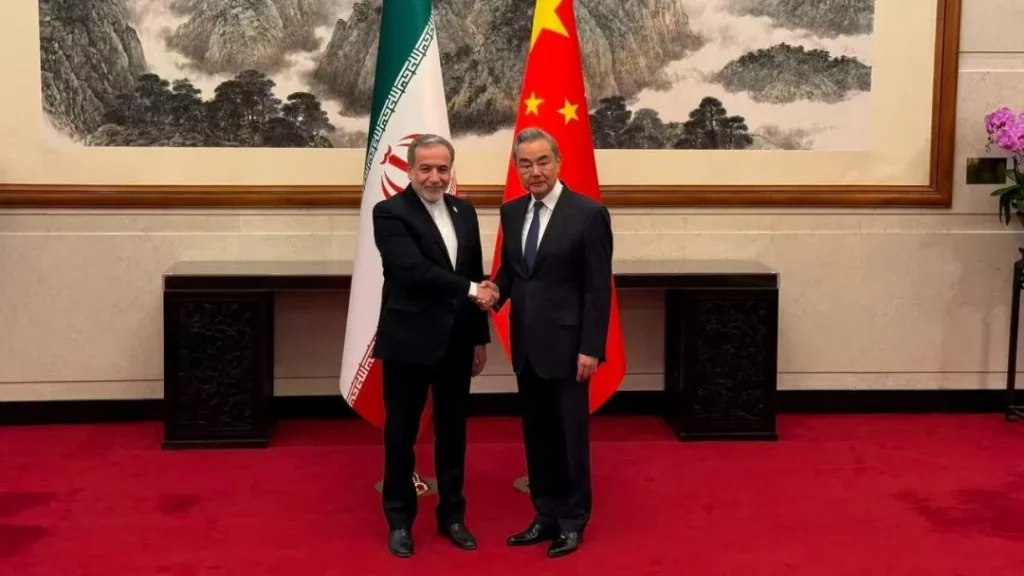
Beijing, China. Iran will accept only “a fair and comprehensive agreement” in negotiations with the United States, Foreign Minister Abbas Araqchi said after meeting China’s top diplomat Wang Yi, as President Donald Trump cited “great progress” in the process.
Iran’s position in negotiations
Araqchi said Iran would seek to protect its “legitimate rights and interests” in the talks, according to Iranian media. He said Iran would accept only “a fair and comprehensive agreement.”
Araqchi did not directly address Trump’s earlier offer of a pause in the U.S. operation to escort ships through the Strait of Hormuz, which was presented as an incentive to help reach an agreement.
Strait of Hormuz blockade and conflict timeline
The Strait of Hormuz has been virtually shut since the conflict began on Feb. 28 with air attacks on Iran by the United States and Israel. The closure has blocked about 20% of world oil supplies and contributed to a global energy crisis.
Iran has effectively sealed off the strait by threatening to deploy mines, drones, missiles and fast-attack craft. The United States has countered by blockading Iranian ports and mounting escorted transits for commercial vessels.
Trump statement and market reaction
Trump wrote on social media that the two sides had “mutually agreed” that while the blockade would remain in full force, “Project Freedom” would be paused for a short period to see whether an agreement could be finalized and signed.
After Trump’s post, Brent crude oil futures fell 1.2% to $108.60 a barrel after dropping 4% in the previous session. U.S. West Texas Intermediate futures eased 1.2% to $101.06 a barrel after settling down 3.9% the day before.
The White House did not immediately reply to a request for comment on what progress had been made or how long the pause would last.
U.S. officials and military developments
U.S. Secretary of State Marco Rubio and other senior administration officials said on Tuesday that Iran could not be allowed to control traffic through the strait.
The U.S. military said on Monday it had destroyed several small Iranian boats, as well as cruise missiles and drones.
What impact do you think a pause in escorted transits could have on shipping through the Strait of Hormuz?