


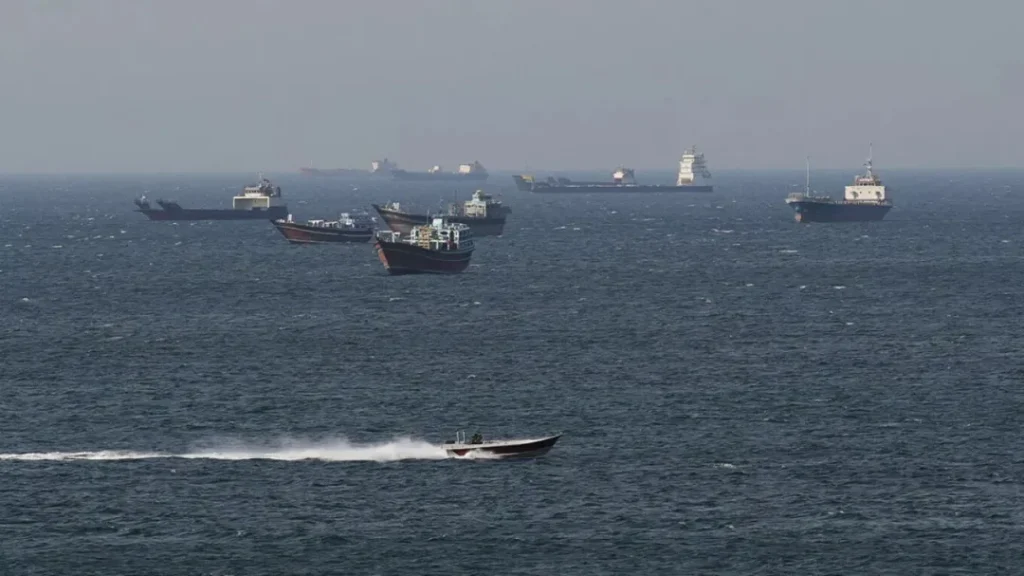
Tehran, Iran. Iran seized two vessels in the Strait of Hormuz on Thursday as the status of a ceasefire with the United States remained unclear and peace talks showed no sign of restarting.
Vessels seized and accusations
The Islamic Revolutionary Guard Corps seized the Liberia-flagged Epaminondas and the Panama-flagged MSC Francesca, escorting them to Iranian shores after accusing both vessels of operating without required permits and tampering with their navigation systems. Maritime security sources said a third container ship was fired upon in the same area but was not damaged and resumed sailing.
White House press secretary Karoline Leavitt called the seizures “piracy” but said they did not constitute a ceasefire violation because neither vessel was American or Israeli.
US position on ceasefire and Iranian response
The developments followed President Donald Trump’s shift on Tuesday, when he stepped back from threats of renewed strikes and said the United States would extend the ceasefire until Iran presented a unified proposal for peace talks. He set no deadline.
Iranian officials did not confirm any agreement to an extension and criticised the continued US naval blockade of Iranian ports, which Tehran considers an act of war.
Iran says full ceasefire impossible under blockade
Iran’s parliament speaker and lead negotiator Mohammad Baqer Qalibaf said a full ceasefire was impossible while the blockade remained in place. “You did not achieve your goals through military aggression and you will not achieve them by bullying either,” he wrote on social media. “The only way is recognising the Iranian people’s rights.”
Strait effectively closed and oil prices
The Strait of Hormuz, which carried roughly a fifth of the world’s oil trade before the war, remains effectively closed. Brent crude held above $100 a barrel in Asian trade on Thursday, after crossing that threshold for the first time in two weeks the previous day.
The US military said it had directed more than 30 ships to turn around or return to port under the blockade, and had intercepted at least three Iranian-flagged tankers in Asian waters near India, Malaysia and Sri Lanka.
Mediation efforts and negotiating positions
Pakistan, described as the chief mediator, was still attempting to bring the two sides together after both failed to appear for tentatively scheduled talks in Islamabad on Tuesday. A first round of negotiations eleven days ago produced no agreement.
Trump is seeking Iran’s surrender of highly enriched uranium and a halt to further enrichment, while Tehran is demanding sanctions relief, war reparations and recognition of its control over the strait.
Regional ceasefire conditions and casualties
Iran has also made a ceasefire between Israel and Lebanon’s Hezbollah a condition of any broader truce. Israeli air strikes on Lebanon killed at least five people on Wednesday, including Lebanese journalist Amal Khalil, in the deadliest day since a 10-day ceasefire was announced on 16 April.
Thousands of people have been killed across the Middle East, mostly in Iran and Lebanon, since the war began with joint US-Israeli strikes on 28 February.
What developments could affect the reopening of the Strait of Hormuz?