


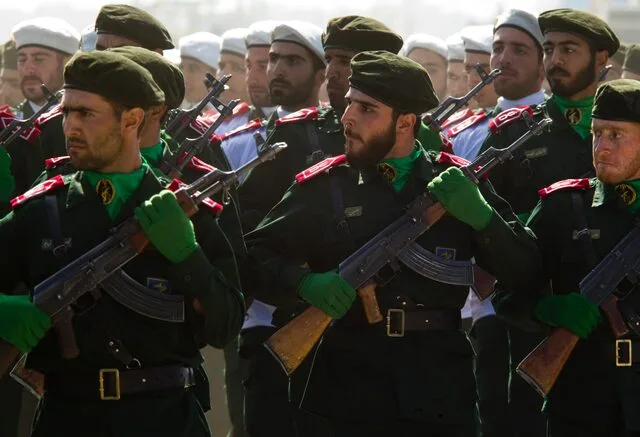
Baghdad, Iraq. Iran’s Islamic Revolutionary Guard Corps has established new covert cells in Iraq to carry out attacks on Gulf countries hosting American forces, according to eight Iraqi sources who spoke to Reuters. The sources said the groups operate outside established militia networks and report directly to the IRGC.
New cells and reported attacks
Three or four cells, each made up of about 10 elite Iraqi Shi’ite Muslim fighters, launched at least seven drone attacks from desert areas near the southern cities of Basra and Samawa between April 20 and May 17, according to three of the sources. The attacks targeted sites in Kuwait, Saudi Arabia and the United Arab Emirates.
Command structure
A number of the fighters were drawn from Islamic Resistance in Iraq, an umbrella group of hardline Shi’ite factions with thousands of members. However, the new cells operate outside that group’s command structure and report directly to the IRGC, the sources said. The sources included two Iraqi military officials, one other security official and five local militia commanders.
Shift in IRGC tactics
The formation of the new Iraqi cells, which Reuters said had not previously been reported, indicates a shift in IRGC tactics, according to the five militia commanders. They said the move is intended to preserve Iran’s capacity to project force across the region at a time when its armed proxy groups have been significantly weakened and its own military and economic resources have been depleted.
Iraq’s role in Iran’s regional network
Iraq, a Shi’ite-majority country, hosts numerous militias, many of which have close ties to Tehran. These groups form a central part of Iran’s regional “Axis of Resistance,” which extends from Gaza and Lebanon to Yemen and Iraq.
Recent attacks and limited proxy mobilization
Groups operating under the banner of Islamic Resistance in Iraq have claimed dozens of drone and rocket attacks against American assets in Iraq since the United States and Israel attacked Iran on February 28. Those attacks prompted deadly retaliatory airstrikes. Despite this, there has been no mass mobilization of Iran’s proxies within Iraq.
Pressure on Iraqi factions
Several powerful Shi’ite factions in Iraq have signaled since last year that they are prepared to disarm and shift their focus to domestic politics in an effort to avoid escalating conflict with the administration of U.S. President Donald Trump. Retired Iraqi army general Jasim al-Bahadli and two lawmakers from the Shi’ite governing alliance said that development may have prompted the IRGC to establish groups under its direct control.
Two of those factions, Asaib Ahl al-Haq and the Imam Ali Brigades, announced this month that they would begin handing over their weapons to state authorities after repeated U.S. warnings to Iraq’s government to dismantle armed groups operating on its territory.
Assessment from a retired general
“The newer groups established by the IRGC appear smaller, more ideologically hardened and more tightly controlled, reflecting Iran’s need to conserve resources amid economic strain,” Bahadli said.