


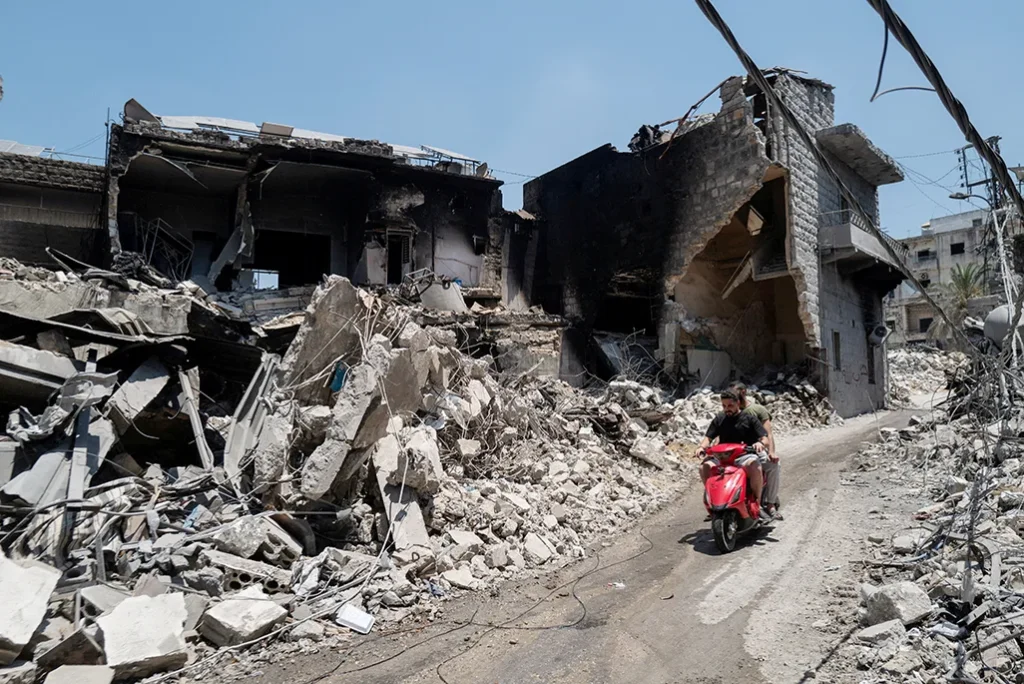
Tyre, Lebanon. Relative calm following an interim agreement between Iran and the United States has revealed extensive destruction in southern Lebanon after a three-month war involving Israel and Hezbollah. Residents displaced by the fighting, including Youssef Fares, say homes and medical facilities in Tyre and surrounding areas have been severely damaged.
Destruction in Tyre
Fares, who has been living for months in a dimly lit hospital room, said his home in the historic southern Lebanese city of Tyre was reduced to rubble and rebar in Israeli strikes during the conflict.
He fled to Jabal Amel University Hospital after his house was destroyed. When he returned following the latest ceasefire agreement, he said the damage left him in tears.
“You couldn’t even look at a single room. It was dark from the soot,” he said. “It was a beautiful house. Honestly, the most beautiful house was my house in Tyre.”
Conflict and displacement
The fighting began on March 2, when Hezbollah fired at Israel in support of Iran, drawing Lebanon into the regional war. Israel responded with air strikes and a ground invasion that occupied parts of south Lebanon.
The war has displaced 1.2 million people across Lebanon. Many, including Fares, have been unable to return because their villages have been destroyed or remain under Israeli control.
According to Jabal Amel University Hospital director Dr. Wael Mroueh, at least 350 people are still living at the hospital along with staff members and their families.
Damage to healthcare facilities
Jabal Amel University Hospital has also sustained damage during the conflict. Earlier this month, an airstrike hit a nearby building and blasted a hole into one of the hospital’s walls.
The nearby Hiram Hospital has been hit at least five times since March 2, according to a United Nations report.
More broadly, the World Health Organization has recorded 203 attacks on healthcare sites across Lebanon. The attacks killed more than 130 healthcare workers while on duty and forced the closure of 44 primary healthcare facilities and three hospitals.