


Astana, Kazakhstan. Kazakhstan has launched formal international consultations to establish a United Nations-backed International Water Organisation (IWO), aiming to centralise what President Kassym-Jomart Tokayev called a “fragmented” global water agenda.
Proposal presented at RES-2026
The proposal was presented during the Regional Ecological Summit (RES-2026) in Astana this week. The initiative is part of Astana’s “extroverted” diplomatic strategy to strengthen its leadership role in Central Asia and position itself as an authoritative actor on climate and environmental diplomacy.
This global push is reflected in Nicosia through the recent appointment of Nikolay Zhumakanov as Kazakhstan’s first-ever resident ambassador to Cyprus.
Environmental diplomacy and regional cooperation
Speaking at a press briefing with international journalists on 22 April 2026, Yerlik Karazhan, CEO of the Central Asia Climate Foundation, said environmental platforms give broader diplomatic efforts “a bit more colours, its meaning and its importance”.
Kazakhstan’s push for a global authority is rooted in its history of environmental trauma, including the Aral Sea disaster. Once the world’s fourth-largest inland sea, the Aral shrank to a tenth of its size following decades of water diversion. Tokayev described the tragedy as “a stark reminder of the consequences of unsustainable policies”.
At the press briefing, Karazhan said that for nations to withstand climatic pressures, they must unify. “To fight this fight back, to adapt to the climate change or mitigate the reasons, you need to get together, you need to become a tree,” he said.
Tokayev cites temperature rise and water dependence
Addressing the summit’s plenary session, Tokayev said “the time for indicating successes is over; the time for making solutions has come”. He said that even if global climate targets are met, Central Asia is likely to experience a 2 to 2.5°C temperature rise.
Kazakhstan relies on external sources for 70 per cent of its water and views the IWO as a mechanical necessity to ensure global water management is no longer a “cherry-picking platform”.
Cyprus water outlook and long-term resilience plans
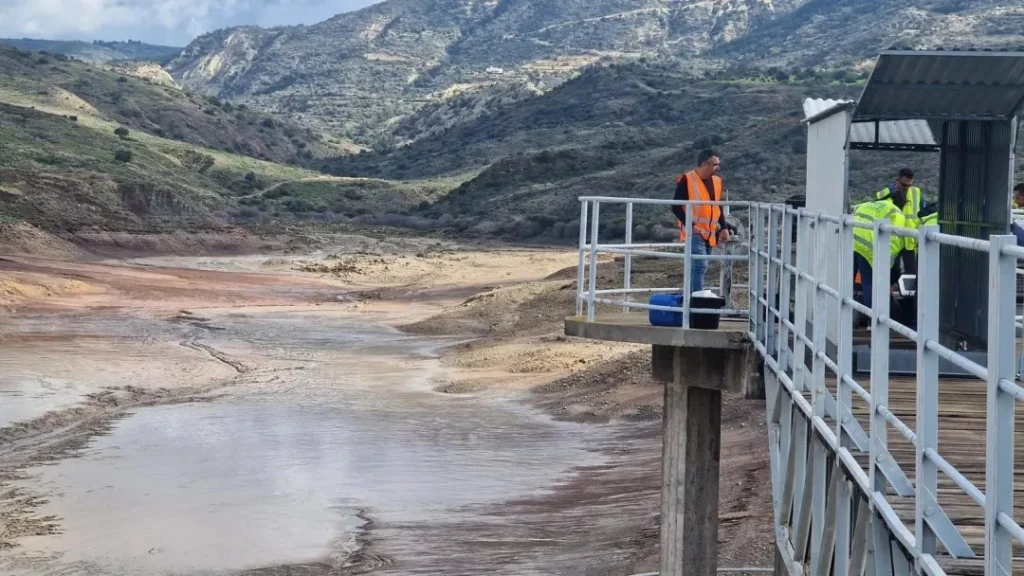
The challenges raised in Astana resonate with the water crisis in Cyprus. While dam reserves on the island reached a low of 14 per cent earlier in the year, rainfall in March and early April improved the outlook, with levels rising to approximately 38 per cent of capacity.
Despite the seasonal recovery, the Republic of Cyprus has remained focused on long-term resilience to avoid a return to “tragic” scarcity. The government is moving forward with plans for 12 desalination units by the end of 2026 to reduce reliance on unpredictable precipitation.
Technology transfer and infrastructure losses
Water-scarce countries such as Cyprus could benefit from the proposed IWO through the institutionalised transfer of advanced water-saving technologies. A Council of Economy and Competitiveness of Cyprus survey in February 2026 identified drought and water shortages as the most serious risk facing the Cypriot economy.
Karazhan said solutions to such crises are often found in “improving water efficiency,” adding that “technology transfer is a big story which can be helping.” In Cyprus, approximately 40 per cent of water is lost through ageing distribution networks before reaching the tap.
Desalination funding and local opposition
The Cypriot government has earmarked €140 million for desalinated water in 2026, but the shift has faced domestic resistance. In Mazotos, residents have protested the installation of mobile desalination units, citing concerns over environmental transparency and the impact of brine discharge on protected Posidonia oceanica seagrass meadows.
The community has also raised concerns about the “energy-for-water” trade-off, saying high electricity demands leave water security vulnerable to rising energy prices.
What impact could a UN-backed International Water Organisation have on water-scarce countries such as Cyprus?