


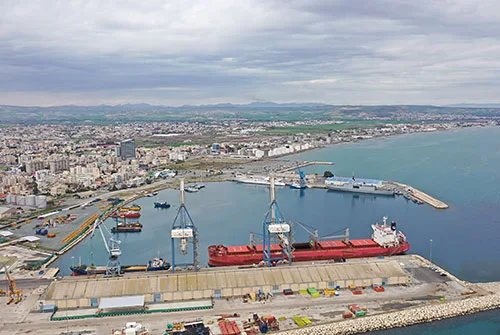
Larnaca, Cyprus. Dust from port operations, abandoned buildings and persistent cleanliness problems dominated a public meeting on Wednesday between Larnaca mayor Andreas Vyras and residents living around the city’s port. The municipality said it would pursue both short-term measures and long-term redevelopment plans.
Residents voice concerns
The meeting was held at Larnaca port’s departure hall and was attended by municipal councillors and officials. It aimed to update residents on ongoing efforts and give them an opportunity to raise concerns affecting their daily lives.
Vyras said the municipality had come to listen as well as speak, and acknowledged that the area faces long-standing problems that have worsened in recent years.
Dust from port operations
The issue raised most frequently was dust generated during the loading and unloading of gypsum and animal feed at the port.
Residents expressed concern about the impact on their health, and reference was made during the meeting to doctors reporting higher rates of respiratory problems among people living in the area.
Temporary and permanent measures
Vyras said the municipality has repeatedly raised the issue with the Cyprus Ports Authority and the transport ministry, describing it as one of the area’s most pressing concerns.
He said the permanent solution remains the transfer of gypsum and animal feed operations to the future industrial port at Vasiliko, a project which both the President and the relevant minister have confirmed will go ahead but will take time to complete.
Until then, he said, authorities are relying on new specialist loading equipment expected to significantly reduce dust emissions.
According to Vyras, both the companies carrying out the loading operations and the Cyprus Ports Authority have assured the municipality that machinery costing between €10 million and €12 million will reduce dust by around 90 per cent.
He said the municipality would assess the equipment’s effectiveness once it is in operation.