


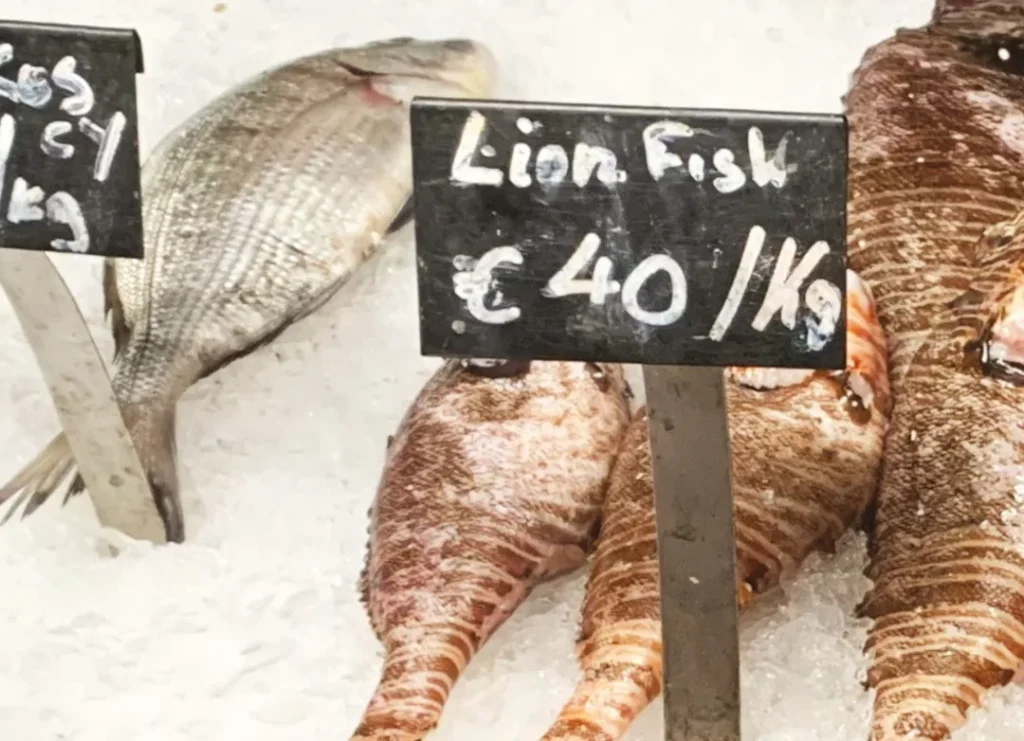
Nicosia, Cyprus. Consuming lionfish could help limit the spread of the invasive species in the Mediterranean, marine biologist Evagoras Isaias said on Thursday, as the fish becomes increasingly established in Cypriot waters.
Lionfish, native to the Indian Ocean, entered the Mediterranean through the Suez Canal and has few natural predators in the region.
Impact on marine ecosystems
The species has raised concerns over its impact on marine ecosystems because it preys on native fish and other marine organisms.
Speaking on Sigma TV, Isaias said increased demand for lionfish could encourage fishermen to remove more of the species from the sea.
“This is a particularly delicious fish, which can easily be incorporated into the dietary habits of consumers in the Mediterranean,” he said.
Safe preparation
Isaias said lionfish is safe to eat when handled correctly, despite its reputation as a poisonous species.
The venom is contained in the spines of its fins rather than in the flesh, allowing the fish to be cleaned and prepared for consumption after the dangerous parts are removed.
Market and removal initiatives
Lionfish currently sells for about €40 per kilogram, reflecting the specialised technique required to catch it with spearguns and the skill needed to clean it safely.
The species has been the subject of scientific monitoring and removal efforts in Cyprus, including projects by research organisations and programmes intended to develop a market for lionfish as food.
Carlos Jimenez, research director of environmental organisation Enalia Physis and a participant in the EU-funded RELIONMED project, has previously said lionfish had become firmly established in Cypriot waters.