


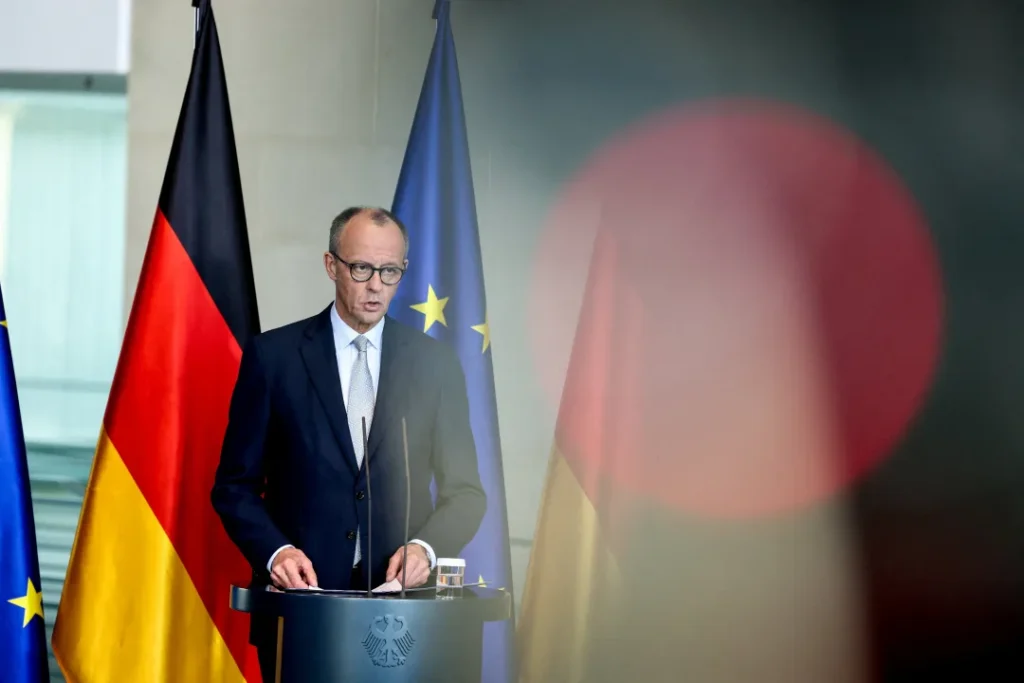
Berlin, Germany. German Chancellor Friedrich Merz told lawmakers Germany will not participate in military measures to ensure freedom of navigation in the Strait of Hormuz while the war continues, citing doubts about the U.S.-Israeli operation against Iran.
Germany rejects military role in Hormuz
Merz said he agreed Iran must not be allowed to pose a threat to its neighbours but questioned the rationale behind the U.S.-Israeli war. He told German lawmakers on Wednesday that there was no convincing plan for how the operation could succeed and said Washington had not consulted Germany or indicated that European assistance was necessary.
“We would have advised against pursuing this course of action as it has been pursued,” Merz said. “Therefore, we have declared that as long as the war continues, we will not participate in ensuring freedom of navigation in the Strait of Hormuz, for example, by military means.”
European leaders avoid direct involvement
European leaders have rejected direct involvement in U.S.-Israeli military operations against Iran, citing concerns about being drawn into an unpredictable conflict with aims they do not fully understand and that is unpopular with their citizens.
Merz’s Defence Minister Boris Pistorius said on Monday, “This is not our war, we have not started it.” French President Emmanuel Macron also said, “We are not party to the conflict.”
Transatlantic tensions and Trump’s response
European leaders are weighing the benefits of staying on the sidelines against risks to transatlantic ties already strained by issues including the war in Ukraine and tariff disputes. Europeans have also been wary that angering Trump could affect U.S. support for Ukraine or lead to pressure on Kyiv to accept a deal favouring Moscow.
The existence of NATO has also been questioned, with allies rattled earlier this year by Trump’s designs on taking Greenland from fellow NATO member Denmark. Trump gave no indication he plans to punish NATO allies, but said they had made a “very foolish mistake” by not joining the U.S. in its military operations in Iran.
How do you think Europe’s stance on Iran will affect its relations with the United States?