


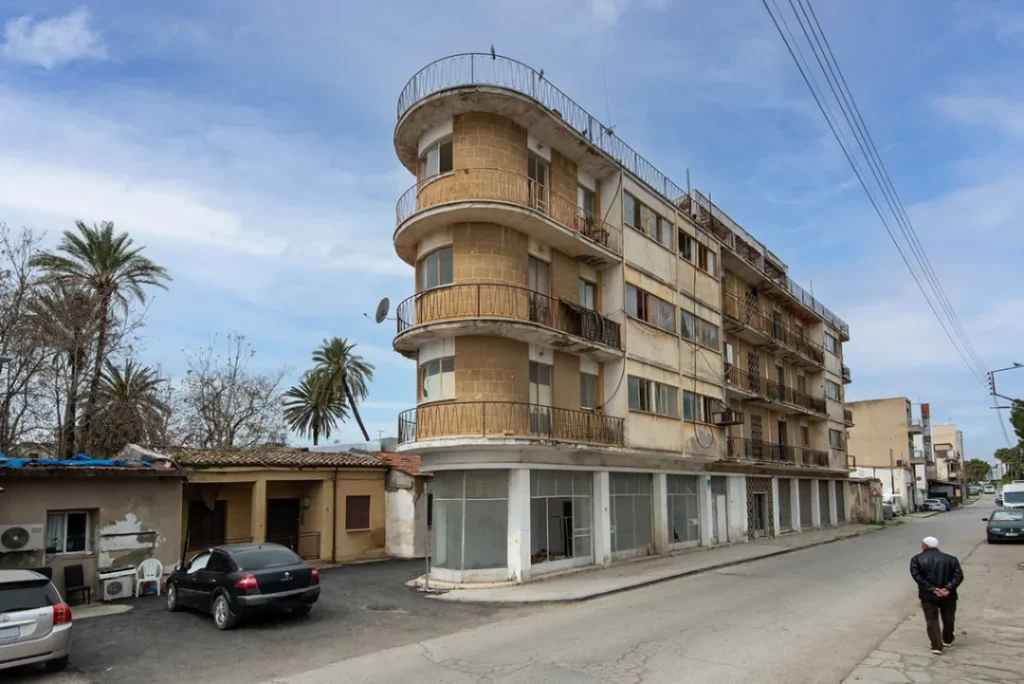
Nicosia, Cyprus. A new exhibition titled Modern Nicosia is on display at Mayor Lellos Demetriadou Square, the former Municipal Market agora, in the centre of the old town to highlight the city’s often overlooked modernist architecture. The exhibition presents photographs and drawings of notable examples of Cypriot architectural modernism from both sides of the divided capital.
Exhibition launch and organisers
The exhibition was inaugurated a week ago by Nicosia mayor Charalambos Prountzos in the presence of former European Union culture commissioner Androulla Vassiliou and participants attending the European Cultural Heritage Summit 2026.
The photographs and accompanying notes on the history of the buildings were prepared by members of the Europa Nostra Heritage Hub in Nicosia, a body created last year as part of the European Heritage Hub, a European pilot project led by Europa Nostra with a consortium of 20 partners and supported by the European Union. The project aims to safeguard cultural heritage while contributing to a more inclusive, sustainable and digital Europe.
Project aims
Coordinated by architect Natalie Neophytou and urban sociologist Ozlem Unsal, the Modern Nicosia project was conceived to highlight the legacy of modern architecture on both sides of the divide by drawing attention to landmarks of this architectural style across the city. Its stated aim is to raise awareness and foster greater appreciation of a significant but often overlooked architectural legacy.
Neophytou said an important part of the project was to help people recognise that these buildings are part of the city’s heritage and history and are worth preserving. She said the period of modernist architecture marked the time when Nicosia began to expand beyond its walls and that modernism formed the urban fabric of the city known today.
Research and selection
The research team led by Neophytou and Unsal included Greek Cypriot and Turkish Cypriot conservation architects, urban planners, architectural historians and theorists, as well as visual anthropologists. The team worked voluntarily for about six months gathering information about leading architects from both communities.
The exhibition features 40 selected buildings, including cinemas, restaurants, factories, churches, hotels, hospitals, shops and apartment blocks from across the capital. Twenty of the buildings are located within the Venetian Walls and 20 are in areas outside them.
Buildings featured
Among the buildings included are the Caglayan bar, constructed by Greek Cypriot chief mason Pavli, the Pallas cinema next to Paphos gate, designed by Panayiotis Stavrinides, the Jerusalem Patriarchate office building on Ledra street, designed by architects Zembylas and Kythreotis, and the Colocassides estate building, designed by Costas Vafeades and Dinos Fissentzides between 1965 and 1973, next to Eleftheria square.
The exhibition also includes the Boyaci shops and apartments attributed to Loucas Hadjilukas, built in 1954 on Istanbul street, the Oguz Basak house designed by Ahmet Vural Behaeddin and Ercan Hifzi in the 1960s on Shakespeare avenue, and the Huseyin Sarper residence designed by Abdullah Onar near Caglayan.
Preservation concerns
All the buildings shown in the exhibition were built between the 1930s and the 1970s. Neophytou and Unsal said that despite their architectural significance, a considerable number of them are currently empty and at risk of demolition.