


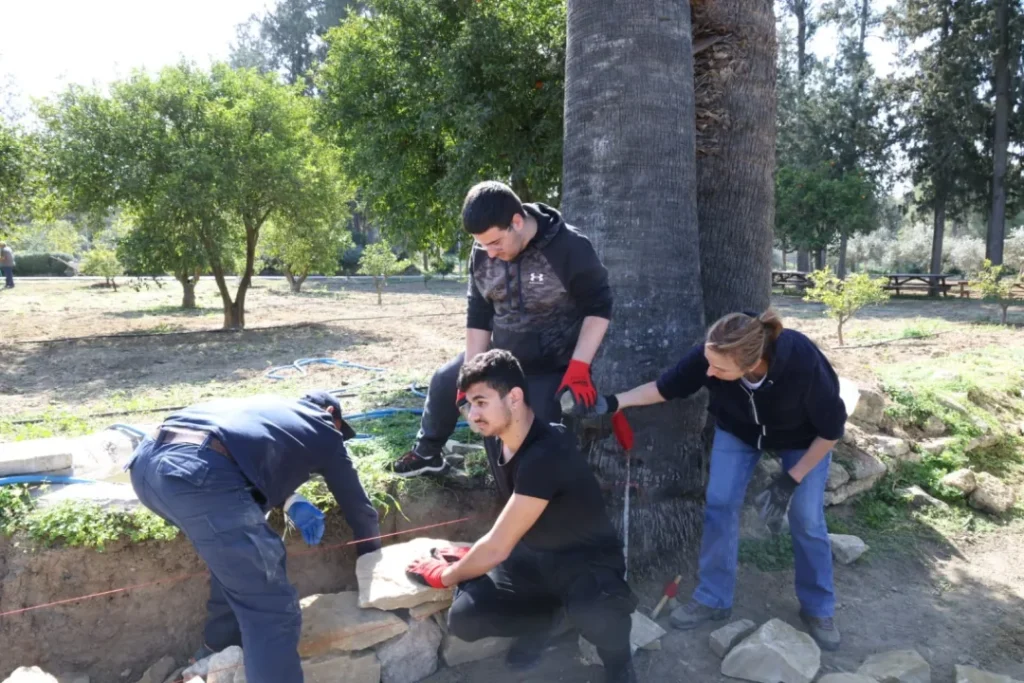
Nicosia, Cyprus. Students from the technical school of Nicosia took part in a practical dry stone building workshop in the gardens of the presidential palace on Thursday, an initiative aimed at strengthening technical education and preserving traditional construction knowledge.
Workshop organisation and participants
The one-day workshop was organised by the environment commissioner, Antonia Theodosiou, and involved first-year students from the architectural and civil engineering department and second-year students from the structural design specialty. Technical school teachers as well as instructors from the post-graduate vocational institute (Mieek) also participated.
Focus on cultural and environmental value
Theodosiou introduced the students to the cultural and environmental value of dry-stone construction before the practical work began. “Dry stone building forms part of the traditional architecture and cultural heritage of Cyprus,” Theodosiou said. “At the same time, it contributes to the sustainable management of the landscape and the protection of the environment.”
Technique and benefits of dry stone structures
Dry stone walls and domed structures are built entirely from stone without mortar. The technique, widely used historically, helps stabilise soil, control rainwater and create small habitats for plants, insects and animals. “These structures protect the soil from erosion and enhance biodiversity by creating micro-ecosystems,” Theodosiou remarked.
On-site practical work
Following the introductory briefing, students worked on site wearing protective gloves and applying the basic principles of the craft as they constructed and restored sections of stone structures in the garden.
What role should practical workshops play in technical education in your view?