


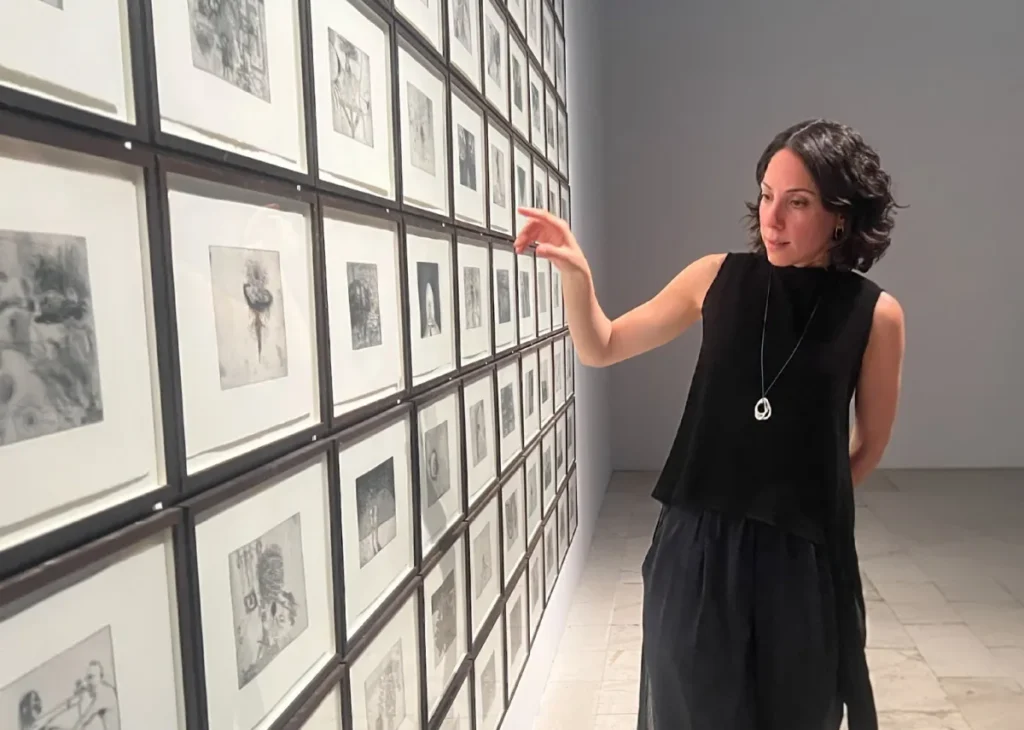
Nicosia, Cyprus. A Slight Indisposition, an exhibition featuring 16 contemporary artists from Cyprus and abroad, closed on Sunday at the Nicosia Municipal Arts Centre (Nimac) following a month that included controversy and debate within Cypriot artistic circles.
The exhibition, curated by art historian and researcher Esra Plumer Bardak, was the first at Nimac to be exclusively curated by a Turkish Cypriot.
Final installation
Among the final works encountered by visitors was British artist Fauve Alice’s a hammer, a coin, a cry, a wish, a large mulberry tree trunk embedded with copper coins covered in verdigris.
The work can resemble a fragment of a dragon’s tail from a distance and has been interpreted as a reflection on the effects of money and greed on nature.
Bardak said the work also refers to a wishing tree near the summit of St Hillarion Castle in the Pentadaktylos mountains. The tree is covered with coins and nails placed there by visitors who believe the act may bring good luck, cure illness or mark their visit.
“The artist does refer in her work to the tree at the St Hillarion Castle,” Bardak said. “That is why this work is not only about the destruction of nature but also a kind of an oath you make for the future. There’s a very strong presence of collective wishing there.”
Kafka and contemporary art
The exhibition title was drawn from Franz Kafka’s novella The Metamorphosis, in which the protagonist Gregor Samsa uses the phrase “a slight indisposition” after waking to find he has become an insect.
Bardak said she began developing the exhibition over the past two years, while the world marked the 100th anniversary of Kafka’s death in 2024. Rereading The Metamorphosis led her to consider its themes alongside contemporary artistic practices in Cyprus.
“The exhibition is something that I’ve been thinking about and building over the past two years,” she said. “When I looked at the contemporary artistic practices in Cyprus, I saw a lot of overlaps.”
Bardak described Nimac as an evident venue for the project, citing its role as the island’s longest-running contemporary art space.
Nature and consumer society
Kafka was not the sole influence on the exhibition, Bardak said. She also drew on John Berger’s essay Why We Look at Animals, which examines the changing relationship between people and nature in the consumer age.
According to Bardak, Berger argued that animals, once central to human existence, have been marginalised and reduced to spectacle.