


Washington, United States. A range of major political, military and technological developments occurred on January 19 across different eras, from imperial appointments and sieges to wartime attacks and liberation. The date also includes pivotal decisions shaping international diplomacy and modern infrastructure.
Roman Empire: Theodosius proclaimed co-emperor (379)
On January 19, 379, Roman Emperor Gratian elevated his general Flavius Theodosius, later known as Theodosius I, to Augustus, making him co-ruler of the Eastern Empire. Contemporary records describe the move as unifying leadership over Rome’s eastern provinces under Theodosius and setting the stage for his sole rule after Gratian’s death.
Tang China captures Kucha in Central Asia (649)
On January 19, 649, Tang forces under General Ashina She’er completed the conquest of Kucha, in present-day Xinjiang, after a 40-day siege. The king of Kucha was captured and the city’s defenders surrendered, extending Tang control over Silk Road oasis states and securing Chinese rule in the western Tarim Basin.
Hundred Years’ War: Rouen surrenders to Henry V (1419)
On January 19, 1419, English forces under King Henry V took Rouen after a six-month siege running from July 1418 to January 1419. The French garrison capitulated, and the fall of Normandy’s capital marked a major English triumph that shifted the balance of power in northern France.
United States: Georgia secedes from the Union (1861)
On January 19, 1861, the Georgia Secession Convention declared the state’s departure from the Union ahead of the American Civil War. The Georgia ordinance dated “Jan’y 19, 1861” recorded ratification of secession, making Georgia the sixth Southern state to leave, joining the Confederacy over issues including states’ rights and slavery.
Franco-Prussian War: Battle of St. Quentin (1871)
On January 19, 1871, the French Army of the North under General Faidherbe fought Prussian forces at St. Quentin in the last major field battle of the Franco-Prussian War. Both armies suffered heavy losses, and the defeat further weakened the besieged French Republic, hastening France’s eventual surrender and German unification.
Technology: Edison’s overhead electric lighting system begins service (1883)
On January 19, 1883, Thomas Edison’s electric lighting system, described as the first to use overhead distribution wires, began service in Roselle, New Jersey. The installation demonstrated the feasibility of supplying electric power for illumination across a community and foreshadowed the modern electric power grid.
World War I: First German Zeppelin bombing of Britain (1915)
On January 19, 1915, German military dirigibles carried out the first raid on Britain’s civilian areas. Zeppelins L3 and L4 overflew the English coast and dropped bombs on Great Yarmouth and King’s Lynn, marking the first aerial bombing of Britain and the start of strategic air raids on civilian targets.
United States: Senate rejects League of Nations membership (1920)
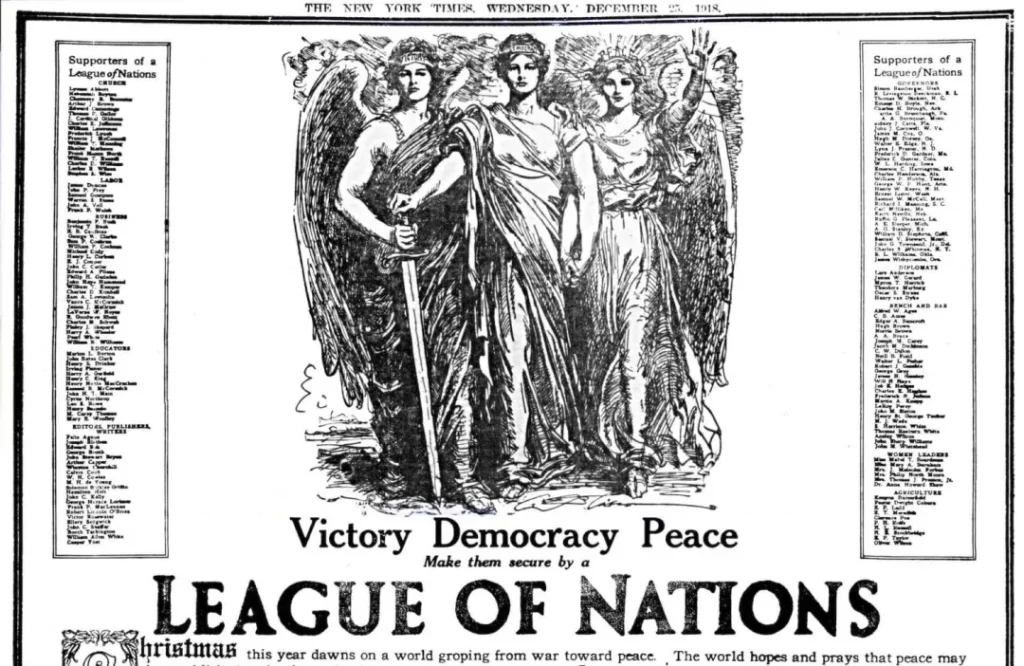
On January 19, 1920, the U.S. Senate voted against ratifying membership in the League of Nations, with Senator Henry Cabot Lodge leading the opposition and securing passage of a resolution refusing entry. By rejecting the League covenant in the Treaty of Versailles, the United States remained outside the organization, a decision that reshaped post-World War I diplomacy and weakened the League’s effectiveness.
World War II: Soviet Army liberates the Łódź Ghetto (1945)
On January 19, 1945, Soviet forces liberated the Łódź (Litzmannstadt) Jewish Ghetto in Poland, established by Nazi occupiers in 1940 as a site of forced labor and deportation. By liberation, fewer than 1,000 of the roughly 200,000 Jews confined there remained, and the Soviet advance ended the ghetto’s final chapter.
Which of these January 19 events do you think had the greatest long-term impact on later history?