


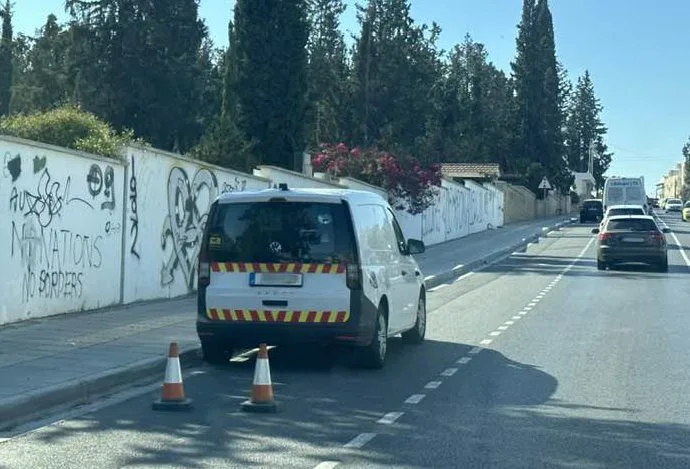
Nicosia, Cyprus. Officials on Thursday rejected a proposal to install flashing beacons on private mobile camera vans, citing added costs for the government and constitutional restrictions on legislation that increases spending.
Constitutional restriction cited
An official with the attorney-general’s office cited Article 80.2 of the constitution, which bars members of parliament from introducing legislation that would increase budgetary expenditure. The official also referred to a recent ruling by the supreme constitutional court affirming the prohibition.
How the mobile camera vans operate
Operated by private contractors, the often unmarked white vans are used for covert speed enforcement on highways and urban roads. The vans use rear-mounted cameras, and sometimes side-facing ones, to capture speeding violations, seatbelt, and mobile phone offences. Fines are sent via post to registered owners.
Proposal and rationale
The bill to install beacons on the vans was submitted by Greens MP Stavros Papadouris. He said the aim was to enhance motorists’ safety and ensure drivers have “unobstructed visual contact” with the vans. He also said the purpose of the mobile vans was not to “raise money” for the state through fines, but to boost drivers’ safety.
Cost concerns and alternatives
Officials said installing beacons would entail extra cost, borne by the private contractors and then passed on to the state. The transport ministry said it had asked the company operating the vans to provide a cost estimate for potentially installing beacons atop the vehicles. Officials from the justice ministry suggested that, instead of beacons, the vans could be fitted with reflective plates.
Do you support fitting mobile camera vans with beacons or reflective plates to make them more visible?