


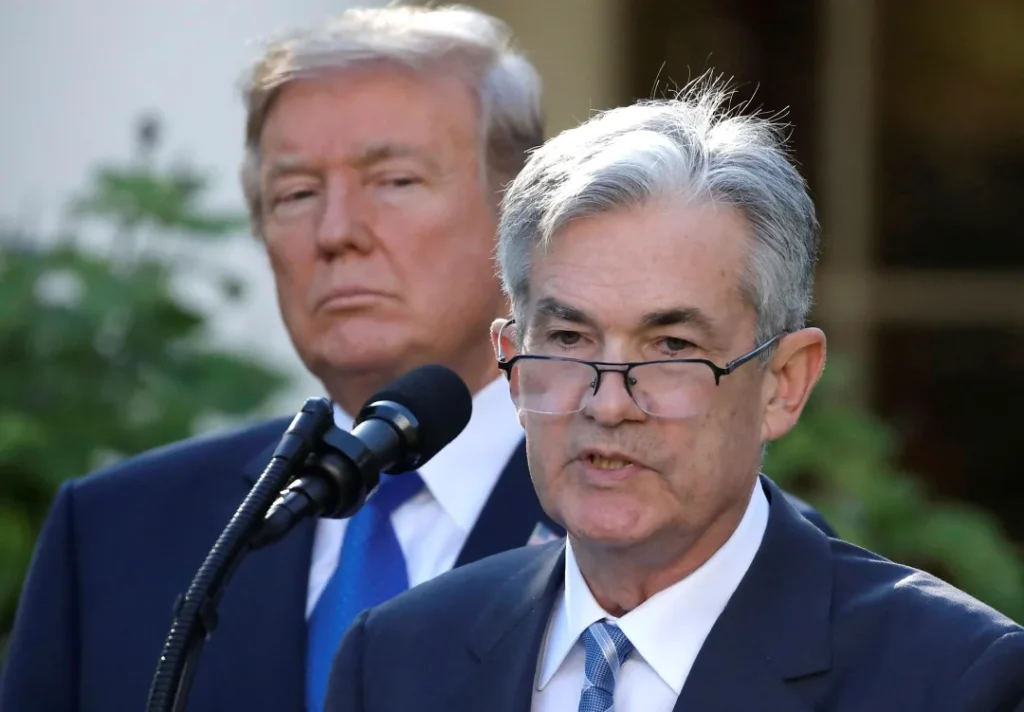
Washington, United States. Federal Reserve policymakers will gather this week for a meeting that may be Jerome Powell’s last as chair, as elevated energy prices and uncertainty linked to the US-Iran war weigh on the economic and policy outlook. The Federal Open Market Committee is expected to vote on Wednesday to keep interest rates unchanged.
Powell timeline and succession
A May 15 endpoint for Powell’s eight years leading the Fed appears more likely after a major obstacle to US Senate confirmation of his appointed successor, Kevin Warsh, was removed on Friday. Powell is expected to oversee a vote to hold the benchmark overnight interest rate steady in the 3.50%-3.75% range, where it has been since December.
The meeting and Powell’s subsequent press conference could address whether policymakers will signal the potential for rate hikes later this year if inflation accelerates. The question of whether Powell would remain on the Fed’s Board of Governors if Warsh is confirmed in time to lead the next policy meeting in June could also be discussed.
Justice Department drops probe
The US Department of Justice on Friday dropped a controversial criminal probe of Powell over renovations of the Fed’s headquarters in Washington. The move potentially satisfies the demands of a key Republican senator who had threatened to delay Warsh’s confirmation because of the probe.
Powell had also made an end of the probe a necessary condition of leaving the Fed’s board. While Fed chiefs traditionally resign their board seats when their leadership terms expire, Powell said last month he might stay and would “make that decision based on what I think is best for the institution and for the people we serve,” in a context tied to President Donald Trump’s efforts to encroach on the Fed’s independence.
Powell could remain a Fed governor until January 2028, the last full year of Trump’s presidency. Trump has nicknamed Powell “too late” for failing to deliver the large rate cuts he demanded.
Policy decision timing and war-related uncertainty
The Fed’s policy statement is scheduled for release at 2 p.m. EDT (1800 GMT), with Powell’s press conference to follow 30 minutes later. Powell is expected to be questioned about his plans and about the policy debate amid the ongoing effects of the US-Iran war.
When the war began on February 28, central bankers said the impact on inflation and growth would depend on how quickly it ended and whether oil prices returned to pre-war levels of around $70 a barrel. Eight weeks later, bombing has paused but economic warfare continues, with the US blocking Iranian ships from leaving the Strait of Hormuz and Iran preventing other vessels from passing through the waterway, disrupting global oil and other supply chains.
Energy prices, inflation, and rate outlook
Brent crude futures have risen about 50% since the start of the war. The increase in gasoline and energy prices last month helped drive the US Consumer Price Index to its biggest rise in nearly four years.
With the Fed expected to hold rates steady, policymakers are weighing whether to acknowledge the possibility of raising borrowing costs if inflation continues to accelerate. Expectations for rate cuts have diminished, with bond markets positioned for the policy rate to remain at current levels through at least mid-2027.
Fed Governor Christopher Waller said last week that the longer energy prices remain elevated and the strait is constrained, the greater the chances that higher inflation becomes embedded across a range of goods and services, supply-chain effects emerge, and real activity and employment begin to slow.
What signals will you watch for in Powell’s press conference about the Fed’s willingness to raise rates if inflation accelerates?